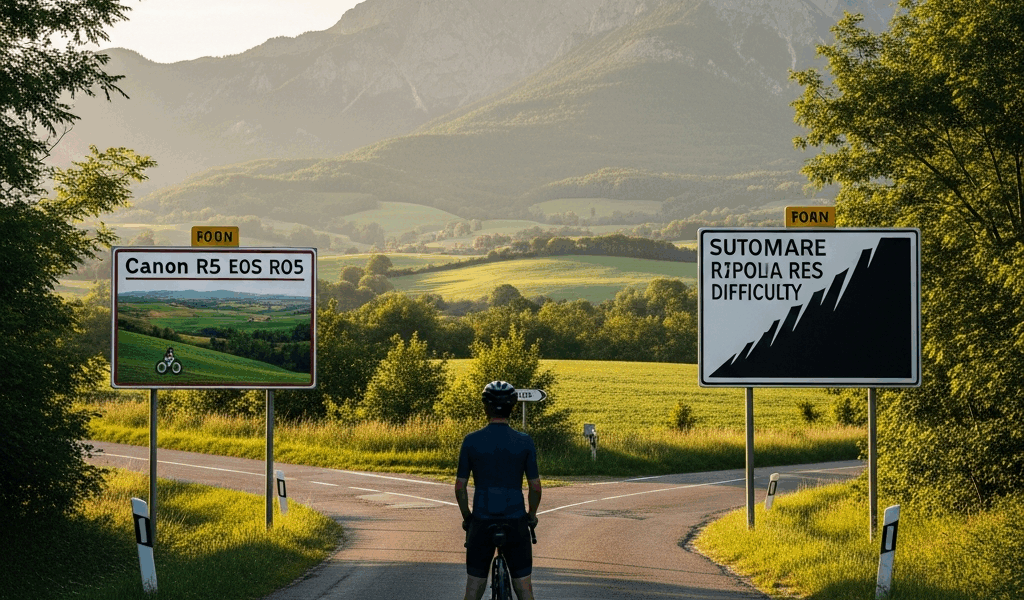
Why Picking the Wrong Event Wrecks Your Day
Choosing a cycling event has evolved with all the prestige marketing and Instagram route porn flying around. I signed up for a 100-mile gran fondo last spring — didn’t think much about it. The route looked stunning. I’d been riding consistently. What I hadn’t done was ride more than 65 miles in a single day. At mile 73, legs completely hollow, a nasty climbing section still sitting between me and the finish, I understood my mistake in a very physical way.
That’s the core problem with how most riders choose events. They don’t, really. They spot something impressive, something that fits a Saturday, and they sign up hoping training fills whatever gap exists. Then one of three things happens: they bonk hard, they finish broken and miserable, or they pick something laughably easy and spend $150 coasting to a finish line they never needed. Sometimes they just don’t finish. I’ve seen all of it.
But here’s the thing — matching your fitness to the right event isn’t some mystical art. It takes honest self-assessment and a basic understanding of what different event types actually demand from your body. This isn’t “just train hard” advice. These are real benchmarks you can use today.
The machine matters too: confirm the event surface and rules, then use our guide to choosing the right bicycle type before spending money on a race, trail, folding, or touring setup.
The Four Main Event Types and Who They Are Actually For
Not all cycling events are created equal. Knowing the structure of each type is the first step to picking the right one. So, without further ado, let’s dive in.
Charity Rides
These run anywhere from 20 to 60 miles. Almost never timed. Designed specifically for mixed-ability groups, with fully supported rest stops every 10–15 miles and a casual 10–14 mph average pace. The atmosphere is social — fundraising-focused, not performance-focused. Entry fees typically land between $40 and $125. Zero competitive pressure. This is where you go if you haven’t ridden seriously in a couple of years or you’re bringing a friend into longer distances for the first time. That’s what makes charity rides endearing to us returning riders — nobody’s judging your Strava splits.
Gran Fondos
The middle ground. Typically 60–100 miles, mass-start format, aid stations but largely unsupported between them. Expect rolling terrain and group paces around 12–16 mph. You’re timed, but finishing matters more than placement — cut-offs are usually generous, somewhere around 7–8 hours. Entry runs $65–$200. But what is a gran fondo, really? In essence, it’s a structured endurance ride with a competitive flavor. But it’s much more than that — it’s also the event where most riders either find their groove or completely blow themselves up. Good fit for someone with 2–3 years of consistent riding and a recent long ride of at least 50 miles.
Century Rides
Exactly 100 miles — usually. Fully supported with sag wagons, timed participation, sag support every 15–20 miles. Pace ranges from 10–15 mph depending on terrain. These attract serious distance riders, not racers. Entry fees run $60–$180. The expectation is simple: you finish. If spending 6–8 hours on a bike feels meditative rather than punishing, this is your zone. You’ll want multiple 70-plus mile rides in your recent history before you commit to this distance.
Bike Races
Competitive by definition. Crit races cover 40–60 miles; road races push 60–120. Expect 16-plus mph average pace, high intensity, winner determined by placement. Entry costs $40–$80, but most require a USAC license — another $60. Riders here have either raced before or trained specifically for group dynamics and surge pacing. Don’t pick this to test your fitness. I mean it.
How to Honestly Assess Your Current Fitness
Worth saying out loud. You can’t match yourself to an event without knowing where you actually stand right now — not where you stood in September, not where you’ll be after six more weeks of training. Now.
Start with three numbers. Your weekly mileage averaged over the last 4–6 weeks. Your longest single ride in the past 8 weeks. Your average speed on a solo 30-minute effort at a pace that feels sustainably hard — uncomfortable but holdable.
Let’s ground those in real terms. Averaging 40 miles a week with a 55-mile longest ride? You’re probably ready for a 70-mile event. Not a 100. If you’re putting in 80 miles a week and you’ve got a 90-miler logged recently, a century is within reach — provided you get two back-to-back long rides done in the month before the event.
That third number — the 30-minute sustained pace — tells you about intensity tolerance. Gran fondos typically roll at 13–15 mph average. If your sustainable pace is 11 mph, you’ll spend the entire day working harder than planned. If you’re sitting at 17 mph, you’ll cruise through the social pace groups mildly frustrated. I’m apparently a 14.5 mph rider and gran fondo pace works for me while crit-style racing never does. Took me an embarrassingly long time to accept that.
Here’s the self-quiz you actually need:
- Have you ridden the event distance before, or at least 80% of it?
- In the past 6 weeks, have you completed two rides of 50-plus miles?
- Are you currently riding at least 3 times per week?
- Have you ridden in the last 2 weeks? (Lapsed fitness matters more than people admit.)
- Can you sustain your target event pace for 2-plus hours without real discomfort?
Four out of five yeses means you’re ready. Three yeses — drop one event category down. Fewer than three? Pick a shorter event or give yourself another 4–6 weeks of structured training first.
Red Flags That Mean You Should Drop Down a Level
Ego is the enemy of smart event selection. Full stop.
The biggest red flag: your longest ride in the past two months is less than 60% of the event distance. Event is 80 miles, longest ride is 40 — you’re betting on everything going perfectly. One mechanical, one wrong turn, one climb that’s harder than the elevation profile suggested, and you’re walking a bike into a rest stop at dusk. Side-step the error I made.
Second flag: no back-to-back ride experience. One strong 70-miler doesn’t prepare your legs for an event if you’ve never ridden 50-plus miles two days in a row. It hits differently. Your legs on day two of heavy mileage are a different animal entirely.
Third: you haven’t ridden in six or more weeks. Fitness drops faster than you think — a five-week layoff likely costs you 1.5–2 mph on your sustainable pace. Compounded over 80 miles, that’s a very long, very unpleasant afternoon.
Fourth — and this one stings — you’re drawn to the event because it looks good on social media or carries some regional prestige. That’s not a fitness reason. That’s ego. Pick events because they match your current fitness, not your self-image as a cyclist.
None of these are moral failures. They’re just data. Smart riders drop down, crush a shorter event, and build real momentum toward a bigger goal. I watched someone DNF a 100-miler in 2019 — miserable, cramping, walking the last four miles. That same rider did a 62-mile gran fondo the following spring and finished strong with energy left over. The training wasn’t wildly different. The event choice was.
How to Use Event Listings to Filter for the Right Fit
Once you know your fitness tier, the event listing itself tells you most of what you need.
Read the cut-off times first — always. A 100-mile century with an 8-hour cut-off expects 12.5 mph average. A 100-mile gran fondo with a 7-hour cut-off expects 14-plus mph. Same distance. Very different events. Know which pace tier you’re in before you register.
Supported vs. timed vs. competitive is your next filter. Supported events — sag wagons, frequent aid stops — are built-in safety nets. Timed events track completion but expect self-sufficiency between stops. Competitive events care about placement, period. Move through those categories in order, based on your actual confidence level.
Before you register, email the organizer. Ask specific questions: What’s the terrain profile — flat, rolling, or mountainous? How frequent are the aid stations? Is the route marked or do you need GPS navigation? What are the section cut-off times? Good organizers answer these clearly and quickly. Bad ones don’t.
Use cyclingeventstoday.com to compare events side by side — distance, terrain, support level, reviews from past participants. Feedback from someone at your fitness level is worth ten times more than the event’s own marketing copy. First-timer reviews especially. They’ll tell you what the website won’t.
Pick the event that fits where you are now — not where you’re planning to be, not where you were two years ago. Train, execute, and actually enjoy the day. That’s the whole framework.
For specific supported rides, race formats, and an eight-week progression, continue with our beginner cycling challenge guide.


Stay in the loop
Get the latest cycling events today updates delivered to your inbox.