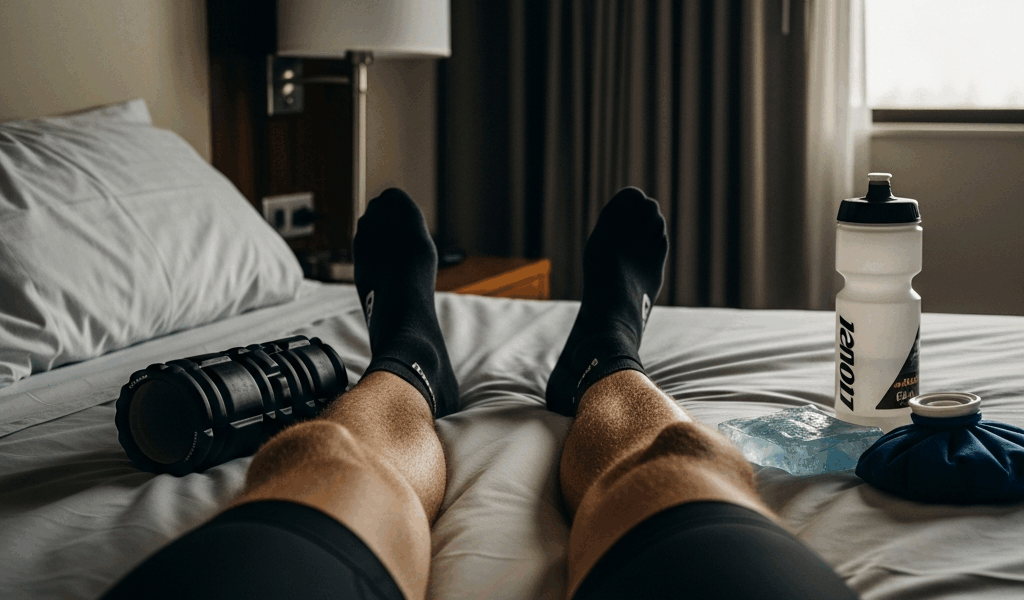
What Dead Legs Actually Feel Like and Why It Happens
Stage racing has turned into a moving target with all the recovery noise flying around. As someone who’s suffered through more than a few brutal day-two climbs, I picked up the practical knowledge of dead legs the hard way. Today, I will share it all with you.
The moment it crystallized for me was during a gran fondo in Colorado — day one went well, dinner felt fine, I woke up genuinely motivated. Then I couldn’t push above 180 watts on the first climb without feeling like I was pedaling through wet concrete. That was humbling.
The sensation is unmistakable. Heavy legs. Unresponsive. Every pedal stroke fighting gravity and friction simultaneously. Cadence drops. Power numbers sitting 15–25% below day one — despite a full night of sleep. Muscles aren’t even sore yet. They’re just useless, like someone swapped your legs for sandbags somewhere between midnight and 6 a.m.
But what causes dead legs? In essence, it’s a convergence of three physiological failures happening at once. But it’s much more than simple tiredness. First, muscle glycogen gets genuinely depleted during day one — especially on hilly routes or whenever you rode harder than planned. Your body reloads overnight, but never fully. Second, micro-muscle damage triggers inflammation that peaks around 24–48 hours post-ride. Day two morning lands right inside that window. Third — and this one surprises people — you’re probably dehydrated at a cellular level even if you drank water all evening. Electrolyte balance matters more than raw fluid volume, and most riders completely ignore this the night before.
That’s what makes day-two suffering so endearing to us cyclists. We do it to ourselves, mostly.
The Mistakes Most Riders Make After Day One
Worth saying out loud. Most dead-leg mornings trace directly back to recoverable errors made in the two to four hours after finishing day one.
The biggest trap is skipping the refuel window. You cross the line, grab a banana and some water, then spend two hours wandering the expo, checking into the hotel, showering, exploring downtown. By dinner, three hours have evaporated. Your muscles are no longer primed to absorb carbohydrates and protein at the rate they desperately need. Recovery nutrition works when it’s immediate — not hours later when you finally sit down to a pasta dish.
The second mistake is alcohol at dinner. I’m not saying skip the beer entirely — I’ve had plenty at stage races, genuinely — but one or two drinks significantly impairs sleep architecture and compounds overnight dehydration. Your body prioritizes metabolizing alcohol over glycogen resynthesis. Feels fine at 8 p.m. Feels devastating at 6 a.m. Learn from what tripped me up.
Staying in your cycling kit too long also tanks recovery. Chamois stays wet against your skin, temperature rises, inflammation compounds. Change within 30 minutes of finishing. Compression gear helps afterward — I use 2XU Recovery Tights, personally — but dry, loose clothing matters more immediately.
The fourth error is sightseeing. Three miles of wandering around a charming race-town isn’t rest. You’re still using the same muscles, just at aerobic intensity instead of anaerobic. Easy walking is genuinely fine. Three miles of exploration is quiet sabotage.
Finally, going to bed dehydrated. Most riders drink water at dinner and call it done. Your body loses fluids through sweat-cooling and respiration all night long. You wake up thirsty, already in a fluid deficit — and that deficit hits your power output immediately.
What to Do the Evening Before Day Two
So, without further ado, let’s dive in.
Within 30–60 minutes of finishing
- Eat something with roughly 1 gram of carbs per kilogram of body weight plus 20–40g of protein. A turkey sandwich works. A bowl of pasta with chicken works. Even a decent recovery drink counts — something like Skratch Labs Recovery Mix. The window is real but forgiving — you have about an hour where absorption is genuinely optimal, not a hard cliff.
- Drink 500ml of electrolyte drink alongside regular water. A sports drink containing sodium outperforms plain water for glycogen storage and actual rehydration. Coconut water is a reasonable alternative if sports drinks bother your stomach.
Two to three hours before bed
- Eat a real dinner heavy on carbs and protein. A big pasta dish, a rice bowl, potatoes with fish — whatever your stomach tolerates. You’re eating for glycogen repletion, not entertainment. Target another 1–1.5g of carbs per kilogram across both post-ride meals combined.
- Elevate your legs for 20–30 minutes. Prop your feet on a chair or the hotel bed — nothing fancy. Blood returns to the core, lactate clears, inflammation drops slightly. I’m apparently someone who needs this more than most, and it works for me while skipping it never does.
- Ice bath or cold shower if you can tolerate it. Not mandatory — compression gear is a legitimate alternative — but 10 minutes in cold water reduces inflammation more effectively than almost anything else. Most stage race hotels have bathtubs. Use them.
One hour before bed
- Drink another 500ml of water with electrolytes added. Sodium specifically helps your body retain that fluid overnight rather than excrete it.
- Sleep in a cool room — 65–68°F if the thermostat cooperates. Muscle recovery during sleep measurably improves in cooler conditions.
- Get eight hours if possible. The first two hours are when growth hormone and glycogen resynthesis hit their peak. More sleep compounds everything else you’ve done.
Morning of Day Two — How to Wake Up Your Legs
The morning routine is your last lever. Get this right and your legs recover from maybe 60% back up to 75% of where day one left you. Miss it and you start the day fighting concrete from kilometer one.
Eat breakfast 90–120 minutes before the start. Toast with peanut butter and honey. Oatmeal with banana. A plain bagel with cream cheese — around 400–500 calories total. Carbs and protein again. Caffeine helps — 200mg of coffee or a straight 200mg tablet — but only if you normally consume it. Your body’s existing relationship with caffeine matters more than the theoretical physiological effect.
About 15 minutes after breakfast, drink 300–500ml of water or sports drink. You woke up dehydrated regardless of last night’s efforts. Fix it before you touch the bike.
If your legs still feel heavy after breakfast, skip the easy spin. Instead, take a 10–15 minute walk around the hotel — genuine easy movement. Blood flow increases without meaningful metabolic cost. Your nervous system wakes up gradually. By the time you actually get on the bike, your legs feel noticeably more cooperative.
On the bike, hold yourself to 60% of threshold power for the first 10–15 minutes. Don’t chase fast groups off the start line. Your glycogen is partially restored — not full. Riders who sprint the first climb on day two blow up spectacularly somewhere around mile 40. Every time.
When Dead Legs Don’t Go Away — What That Signals
Most riders recover. Dead legs on day two are completely normal. But there’s a real line between manageable fatigue and genuine overtraining — or the early stages of illness.
Watch for resting heart rate elevated more than 10 beats above your personal baseline. Legs still feeling heavy at easy pace after 30 minutes of riding. Inability to reach even half your normal power on day three. Swollen lymph nodes in your neck. Add nausea or a headache to any of those — you’re potentially coming down with something real, not just sitting on accumulated fatigue.
The honest call: if dead legs persist through day three and you’re genuinely miserable across the board, a DNF is okay. Finishing a stage race while overcooked or sick isn’t brave. It’s foolish. That said, it happens in maybe 2% of stage races for riders who actually follow a real recovery protocol. Most riders who do the work finish stronger on day three than day two.
Your legs aren’t broken. They’re just undertreated.

Stay in the loop
Get the latest cycling events today updates delivered to your inbox.