The Unspoken Rules Nobody Tells You About
Group ride etiquette has more noise than signal these days. Having showed up to my first shop ride in 2017 wearing a hydration backpack and basketball shorts, I built up a pretty thorough understanding of group ride rules the hard way.
My first group ride was a Wednesday night thing out of a bike shop in Portland. Fifteen riders, no-drop pace, route posted on a whiteboard I did not read because I was too busy trying to figure out how to clip in without falling over. I violated approximately six unwritten rules in the first ten minutes. Nobody said anything to my face. The ride leader pulled me aside afterward and, very kindly, walked me through what I had done wrong. I have been showing up every week since.
That nagging feeling you have — the one that says there is a whole set of unspoken rules everyone else already knows — is accurate. But the rules are not complicated, and knowing them before you show up is the difference between fitting in immediately and spending the whole ride wondering what you did wrong.
Before You Show Up — The Invisible Etiquette That Starts at Home
Looking back, this should have come first. Because half the mistakes new riders make happen before they even reach the parking lot.
Show up 10 to 15 minutes early. Not on time — early. The ride leader usually announces the route, target pace, and any specific rules before departure. Miss that briefing and you are the person asking “where are we going?” two miles in. I was that person once. Only once.
Check your bike before you leave the house. Tires inflated to the right pressure. Brakes functioning. Shifting clean. Showing up with a flat tire or a skipping chain puts the entire group on hold while you fix something you should have caught in your garage. Nobody will say anything to your face, but they will remember.
Bring water, nutrition for the duration, and a flat repair kit — two tubes, tire levers, a CO2 cartridge or mini pump. Asking to borrow a tube on a group ride is the cycling equivalent of showing up to a potluck empty-handed. Once is understandable. Twice and you are that person. I happen to be still carrying guilt about borrowing a tube from a stranger on my third group ride. Fair enough.
Introduce yourself to the ride leader. Ask the target pace. Most group rides list an average speed — 14 to 16 mph or 17 to 19 mph — and those numbers matter. Joining a group 4 mph faster than your comfortable pace ends badly for everyone. You will blow up in 20 minutes and either disrupt the group’s rhythm or end up riding home alone wondering why you signed up for this.
Hand Signals and Verbal Calls — The Safety Communication System
Group rides have a communication system that works surprisingly well once you learn it. There are about six signals that cover 95 percent of everything you will encounter on any ride.
Pointing down left or right: Road hazard on that side — pothole, glass, gravel, road debris. When you see the rider ahead point down, repeat the signal for the rider behind you. Do not let the signal die at your position.
Hand wave behind the back: Slowing down or stopping. The group is about to lose speed. Ease off your pedals.
“On your left”: You are passing someone. Always call it before you pass, not during. I learned this after startling a rider so badly she swerved into the shoulder.
“Car back”: Vehicle approaching from behind. Tighten up the group and ride single file if you are two abreast.
“Car up”: Oncoming vehicle. Same response — make room.
“Hole” or “Gravel”: Specific hazard ahead. These calls pass back through the paceline — if you hear one, repeat it loud enough for the rider behind you to hear. The rider eight spots back needs that information just as much as you do.
It’s the kind of thing that regular riders tend to understand instinctively — it is a simple system that keeps everyone safe, but only if every single rider commits to passing the information back. Communication in a paceline works like a chain. If one link stays silent, everyone behind that link gets surprised.
Riding Your Position — The Single Most Important Skill
Predictability is more valuable than speed in a group ride. Do exactly what the riders behind you expect you to do, every single time. This took me months to internalize.
Hold your line. No sudden lateral moves without looking behind you first. If you spot a pothole, do not swerve — point at it and ride around it gradually. The rider 18 inches behind your wheel cannot react to a sudden swerve. I watched a rider go down on a Tuesday night ride because the person in front jerked sideways to avoid a water bottle. Broken collarbone. Completely avoidable.
Do not brake suddenly unless it is an emergency. If you need to slow down, soft-pedal first. Let gravity and air resistance bleed off speed before touching the brakes. Sudden braking triggers a cascade — the rider behind you brakes harder, the rider behind them harder still, and eventually someone at the back of the group slams their brakes or runs into someone.
Never overlap wheels with the rider beside you. If your front wheel is next to another rider’s rear wheel and they move laterally even six inches, your front wheel gets knocked sideways and you go down instantly. There is no recovery from wheel overlap contact. Keep your front wheel behind or ahead of the rider beside you — never alongside their rear wheel. Take it from me of learning this from a YouTube crash compilation instead of a training partner.
If you must move laterally, do it slowly and obviously. Glance behind you. Make the move gradual. Give the riders behind you time to adjust. The single fastest way to lose a group’s trust is to make unpredictable lateral moves at speed.
What to Do When You Are Getting Dropped
It happens. It happens to everyone. The group picks up the pace on a climb or the wind shifts and suddenly you are watching the last rider pull away while your legs burn and your lungs suggest alternative hobbies. I got dropped on my fourth group ride and sat on a bench for fifteen minutes feeling sorry for myself before riding home alone.
Signal your intent. Do not just disappear from the middle of the paceline. If you feel yourself fading, drift to the back of the group first. Let the riders around you know — a simple “go ahead, I’m falling off” is enough. Then let the gap open.
Stop chasing. Once you are off the back, chasing at maximum effort burns through energy you do not have and still leaves you dropped. The group is drafting at a sustainable pace while you are solo into the wind at threshold. The math does not work. Settle into your own tempo.
Team up if you can. If another rider falls back at the same time, work together. Two riders taking turns pulling at a manageable pace can hold a speed neither could sustain alone. Some of the best riding friendships start from getting dropped together. My regular training partner and I met exactly this way — both shelled off the back of a Saturday morning ride in 2018, and we have been riding together since.
Group rides are not races. Getting dropped is not a mark on your record. It is feedback about your fitness relative to that group’s pace. Find a group that matches your current speed for next time, and come back when you are ready to move up.
After the Ride — Completing the Social Contract
Thank the ride leader. It takes real effort to plan routes, manage a group of mixed abilities, and keep everyone safe for two to three hours. A quick “thanks for leading” costs you nothing and makes them more likely to keep doing it.
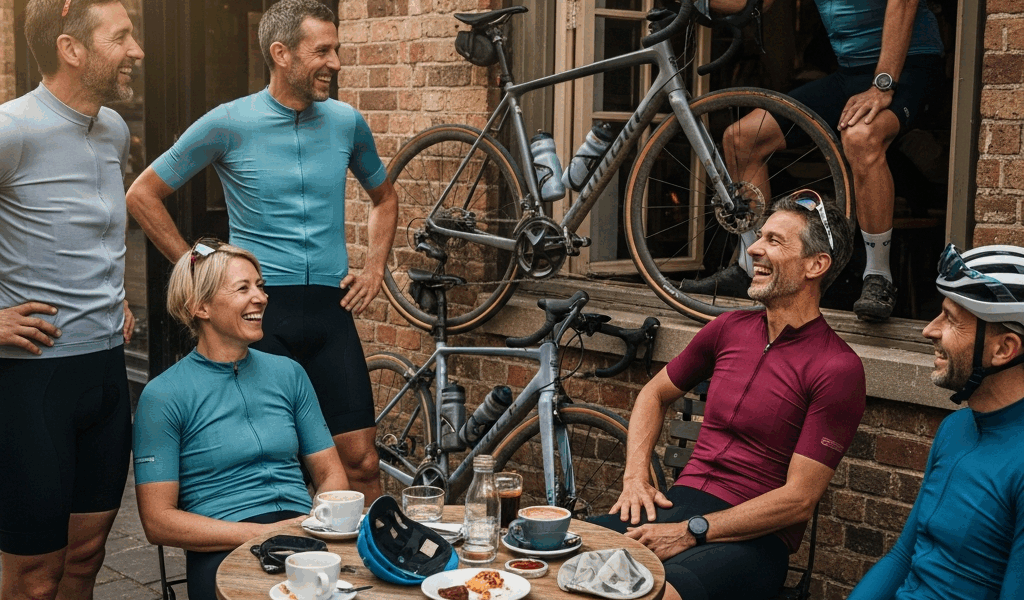
Stay for the post-ride hangout if one exists — coffee, a cafe stop, fifteen minutes in the parking lot. This is where the actual community happens. Upcoming events, local road conditions, training advice, equipment recommendations, and group culture all transfer in those casual minutes after the ride ends. A group ride where nobody talks afterward is just a workout. The social component is what makes group riding sustainable long-term and more enjoyable than riding solo.
You will make mistakes on your first few group rides. Everyone does. The riders who stick around are the ones who show up prepared, communicate clearly, ride predictably, and do not take themselves too seriously when they get dropped on the first hill. That is the real etiquette — care about the group’s safety, be humble about your fitness, and keep showing up.

Stay in the loop
Get the latest cycling events today updates delivered to your inbox.