The Physics Are Simple — The Skill Takes Practice
Drafting in a cycling peloton is one of those topics where the advice you find tends to be either too basic or flat-out wrong. nearly clipped another rider’s rear wheel on my second group ride and spent the next six months afraid to ride closer than a full bike length, and what I learned along the way is worth sharing properly.
My first real drafting experience was on a Wednesday night shop ride in 2018. Someone told me to “sit on the wheel” and I thought that meant ride as close as possible, as fast as possible. I spent thirty seconds staring at a rear tire from six inches away, panicked when the rider ahead shifted slightly, grabbed my brakes, and nearly caused a pileup behind me. The ride leader had a conversation with me afterward that was both kind and very direct. That conversation is the reason I can now ride comfortably in a paceline.
Drafting is safe. But the technique matters more than courage, and building the skill takes deliberate practice over weeks, not a YouTube video and blind confidence.
What Drafting Actually Does — The Energy Math
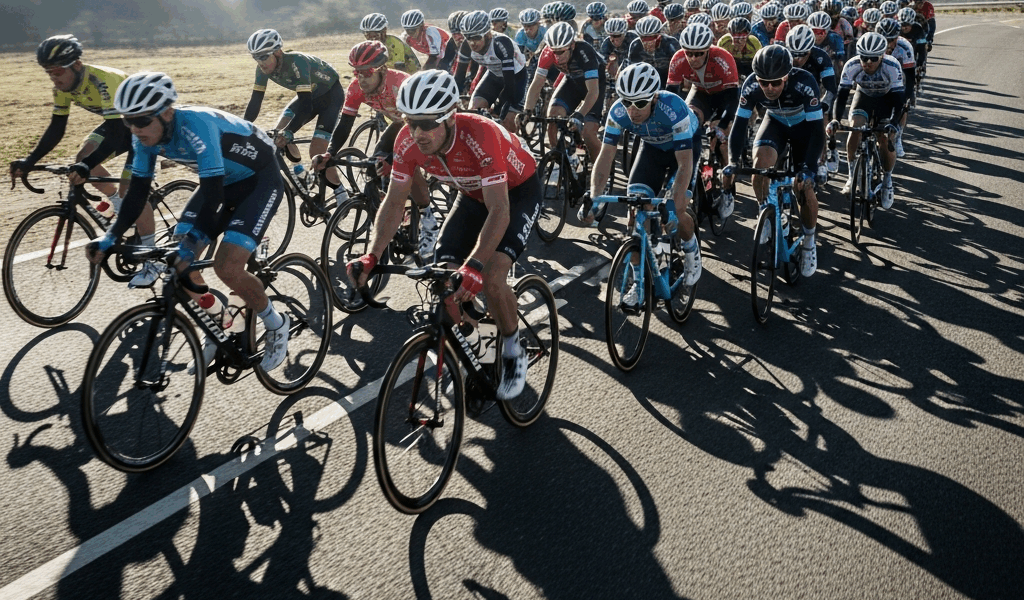
When you ride directly behind another cyclist, their body punches a hole through the air that you slip into. At 20 mph, drafting reduces your aerodynamic drag by roughly 25 to 40 percent. That translates to saving about 30 percent of the energy you would spend riding alone at the same speed.
Even at 15 mph, the savings are real — smaller, but enough that you will arrive at the end of a ride with noticeably more in your legs. It’s the kind of thing that regular cyclists tend to understand instinctively — the group moves faster than any individual while everyone works less, as long as riders take turns at the front.
Drafting is not cheating. It is the whole point of group riding. Understanding the scale of the energy savings makes the learning curve feel worthwhile. You are not riding close for fun — you are doing it because the physics reward it dramatically.
How Close Is Close Enough — Distance by Experience Level
Probably should have led with this topic, to be honest — because this is where most advice gets it dangerously wrong by giving one number that applies to everyone.
Experienced cyclists draft at 6 to 12 inches. Pros in a race might overlap wheels at four inches. But if you try that your first month of group riding, you will crash — or cause one. Take it from me of trying to match experienced riders before your reflexes are ready.
Beginner — first three to six months of group riding: Target three to four feet of separation from the wheel ahead. You still get meaningful aerodynamic benefit at this distance. Not as much as at 12 inches, but enough to feel the difference. More importantly, three to four feet gives you reaction time. When the rider ahead brakes unexpectedly, you need space to respond without swerving.
Intermediate — six or more months, comfortable riding within a group: Tighten to one and a half to two feet. By now you have learned to read body language cues and soft-pedal instead of brake. You trust the rider ahead and they trust you.
Advanced — racing or experienced group riding: Six to 12 inches. This is years of development, not weeks. Getting here requires hundreds of hours riding in groups, reading subtle body language, and developing the reflexes to respond without thinking.
The mistake most beginners make is not riding too far back — it is trying to close the gap too fast because they feel self-conscious about the space. Start at three to four feet. If that feels comfortable after several rides, move closer naturally. Nobody worth riding with will judge you for leaving safe space. I rode at three feet for my entire first season and nobody said a word about it.
Reading the Wheel Ahead — Where to Actually Look
New riders stare at the rear wheel directly in front of them. It seems logical — that is the thing you are trying not to hit. But staring at that wheel leaves zero reaction time because by the time that wheel does something unexpected, you are already on top of it.
Experienced riders look over the shoulder of the rider ahead, scanning at least three riders forward in the line. This peripheral vision approach lets you see what is happening down the road — if the group is slowing, if someone at the front is sitting up, if the pace is changing. I happen to be a slow learner on this point, because it took me most of a season to break the habit of staring at the tire in front of me.
Body language cues to watch for:
Rider sits up slightly: They are about to slow down. Ease off your pedals before they even touch their brakes.
Hand moves toward brakes: Braking is coming. Be ready to soft-pedal or feather your own brakes.
Shoulder rotation: They are about to move laterally — maybe avoiding a pothole, maybe pulling off the front. Do not follow the lateral move until you see why they moved.
These cues give you a half-second to full second of lead time that staring at the rear wheel does not provide. That gap is the difference between smooth riding and panicked braking.
Paceline Mechanics — How Rotation Actually Works
A single paceline is the most common group riding format. The leader rides at the front, takes the wind, then pulls off to one side — usually left in the US — soft-pedals down the side of the line, and drops to the back. The next rider in line is now on the front.
The most common beginner mistake: when you reach the front, you accelerate. It feels natural — you are leading now, so you push harder. But this is exactly wrong. When the group has been holding 18 mph and you hit the front and push 20 mph, the entire group has to speed up to match, then brake when the next person takes over. This accordion effect wastes energy and makes the ride uncomfortable for everyone behind you. I did this my first time at the front and the rider behind me said, very diplomatically, “same speed, just same speed.” Best three words of cycling advice I have ever received.
The rule: when you hit the front, maintain the speed the group has been holding. Not your race pace. Not “just a little faster because it feels good.” The exact same speed. Glance at your computer if you need to — matching the group’s pace is more important than pulling hard at the front.
How long do you pull? As a new rider, 30 seconds to a minute is fine. Nobody expects you to take a five-minute turn at the front on your first group ride. Pull for as long as you are comfortable, then flick your elbow to signal you are pulling off, move to the side, and drift back.
What to Do When You Get Dropped
Getting dropped from a group ride is not failure. It is information about where your current fitness sits relative to that specific group’s pace. Every cyclist has been dropped. The ones who tell you they have not are either lying or have not been riding long enough.
When you lose the wheel ahead, here is what actually works:
Stop chasing immediately. If you have opened a 30-second gap to the group, chasing at maximum effort will leave you completely blown and still dropped. The math does not work — you are at threshold power while they are drafting at endurance pace. You will burn through your remaining energy in three minutes and have nothing left for the ride home.
Settle into your own tempo. Find a pace you can hold for the rest of the ride. This is probably two to three mph slower than the group was averaging. That is fine. You will finish the ride and ride again next week.
Team up if possible. If another rider falls back at the same time, work together. Two riders taking turns pulling at a sustainable pace can hold a speed that neither could manage alone. This is drafting in its simplest, most practical form — and it is often where new riders build the most confidence with wheel-following skills.
After the ride, find a group that matches your current fitness for next time. Riding with a group three to four mph faster than your comfortable pace turns every ride into a survival exercise. A group at your speed lets you practice paceline skills, learn hand signals, and enjoy the ride — which is how you actually get faster over time.

Stay in the loop
Get the latest cycling events today updates delivered to your inbox.