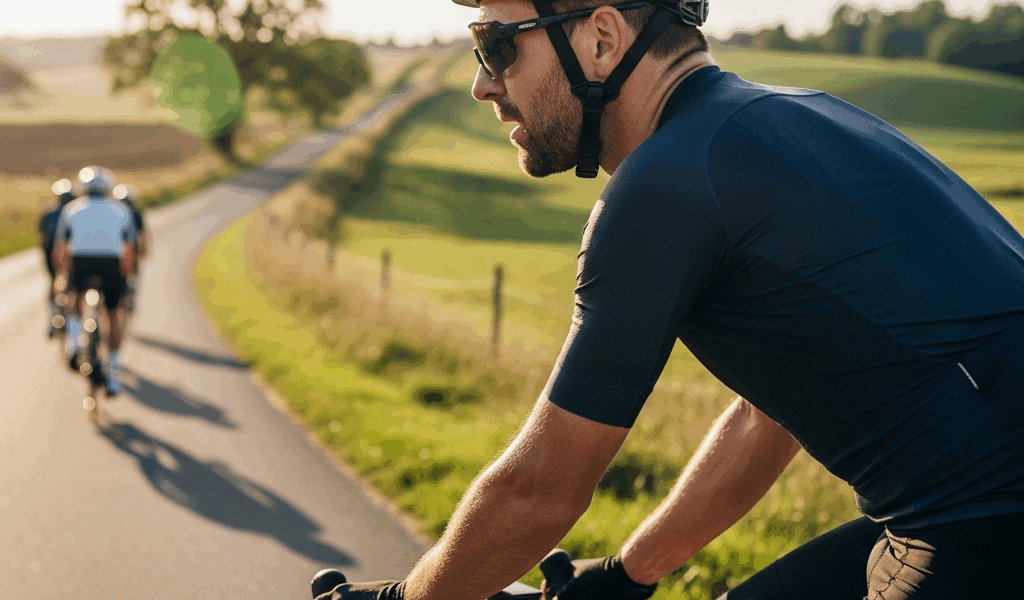
How to Join a Group Ride When You Know Nobody
Group cycling is surrounded by more bad advice than good at this point. As someone who showed up to their first group ride knowing exactly one thing — I owned a bicycle — I figured out most of what you need to know. There I was, standing alone in a parking lot at 7am, helmet in hand, watching thirty strangers in matching kit roll up on bikes that probably cost more than my car. The physical part of riding? Fine. The social part — introducing yourself, figuring out where to stand, not getting immediately shelled off the back on the first climb — nobody prepares you for any of that. Most articles about group rides assume you’re already in one. This one doesn’t.
Finding a Group Ride That Matches Your Level
The first mistake most new riders make is showing up to the wrong ride. Not wrong in terms of location — wrong in terms of pace. There’s a massive difference between a social spin and what some clubs cheerfully call a “hammerfest.” That difference will either make you a cyclist or make you sell your bike on Facebook Marketplace within three months.
Here’s where to actually look:
- Local bike shops: Almost every independent shop runs a weekly group ride — usually Saturday or Sunday morning. Walk in on a Tuesday, ask at the counter, and they’ll tell you the pace, the distance, and who shows up. These rides tend to be the most beginner-friendly because shops want customers, not casualties.
- Cycling clubs: Search “[your city] cycling club” and you’ll usually find a club with multiple ride categories on their website. Something like the Chicago Cycling Club or Atlanta Bicycle Coalition will often send three or four distinct groups out on the same morning.
- Strava: The Strava clubs feature is genuinely useful here. Search your area, join a local club, and check the event feed. Most active clubs post their weekly rides there with pace and distance listed plainly.
- Meetup.com: Underrated, honestly. Cycling groups on Meetup tend to skew toward social riders and are often explicitly beginner-welcoming in ways that club websites aren’t.
When you find a ride, pay attention to how they describe the pace. The three most common categories you’ll see are social or recovery — 14 to 16 mph average — intermediate at 17 to 20 mph, and advanced or “A-group” at 20-plus mph with no mercy. Some groups use letter grades: A, B, C. C is approachable. A will make you question your life choices. If the listing says “no-drop,” keep reading — that phrase does a lot of work it doesn’t always deserve.
What No-Drop Actually Means
This part deserves more attention than it usually gets. “No-drop” is the most misunderstood term in recreational cycling. It sounds like a promise. Sometimes it is. Often it’s more of a suggestion.
A no-drop ride is a ride where the group waits for everyone and nobody gets left behind. But there’s more going on here — or at least it’s supposed to be. In practice, some groups say “no-drop” and mean it completely. Others say it and then surge up every climb at 22 mph and reconvene at the top — which technically isn’t dropping you, they’re just waiting at a corner three miles ahead while you suffer alone on a hill.
Before you commit to a ride, verify what “no-drop” means for that specific group. Ask them directly. Most shop rides and club C-group rides are genuinely no-drop — the ride leader will slow down, wait, and pace the group around the slowest rider. If you’re messaging a club organizer or asking at the shop counter, the question to ask is: “If someone is struggling on a climb, does the group slow down or wait at the top?” The answer tells you everything.
Another word you’ll hear is “regroup.” This means the faster riders stop at a predetermined point — a stop sign, a parking lot, the top of a climb — and wait until everyone is together before continuing. Regroup is a good sign. It means the ride has structure and someone is paying attention to the back of the pack.
One more thing: if a ride description says “no-drop” but also lists an average pace above 19 mph for a flat route, be skeptical. Either the pace description is wrong or the no-drop description is. A genuinely no-drop ride doesn’t advertise elite-level speeds in the same breath.
Your First 10 Minutes — Where to Position Yourself
Paralyzed by the idea of rolling up alone to thirty strangers, I spent my first three group rides hovering near my car until the last possible moment and then latching onto the back like a nervous barnacle. Turns out — that’s actually correct behavior.
Start at the back. Not because you’re lesser, but because it’s the sensible place to be when you don’t know the route, don’t know the riders, and haven’t calibrated to the group’s pace yet. The back of a cycling group is the observation deck. You watch how people ride, where they signal hazards, when the pace surges, how the group handles intersections — all without being in a position where your hesitation causes a problem for anyone else.
Before you clip in and roll out, introduce yourself to one person. Just one. Pick whoever is standing nearest to you and say something like, “Hey, first time riding with you guys — is there anything I should know?” That question does three things: signals you’re new and paying attention, usually prompts someone to give you a 30-second orientation, and creates at least one person in the group who knows your name. That’s enough. You don’t need to work the crowd like a political fundraiser.
Once you’re rolling, follow wheels. That means keeping a consistent gap between your front wheel and the rear wheel of the rider ahead — about a foot to two feet in a practiced group, a bit more when you’re starting out. Don’t let massive gaps open up, but don’t overlap wheels either. Overlapping wheels — where your front wheel sits beside or slightly ahead of someone’s rear wheel — is how crashes happen. If the rider in front brakes or swerves suddenly, your wheel has nowhere to go.
Stay relaxed. Tense arms translate directly into a twitchy front end, and a twitchy front end in a group is genuinely dangerous. Soft elbows. Loose grip. Let the bike move a little beneath you.
The Unspoken Rules Nobody Tells New Riders
Group riding has a social contract — one that experienced cyclists absorbed over years of riding and apparently nobody bothered writing down anywhere useful. Here are the ones that matter most for your first few rides.
Don’t half-wheel
Half-wheeling is when you ride with your front wheel half a wheel-length ahead of the rider beside you. It forces that person to accelerate to stay even, which forces the whole group to ride faster than anyone intended. It reads as aggressive even when it’s unintentional. Ride shoulder to shoulder with whoever is beside you, or fall back slightly behind them.
Call out hazards
Pothole, glass, car door opening, crack in the road — you call it out and point to it. Left hand pointing down and to the left for hazards on the left side, right hand for the right. You also say something out loud: “hole,” “gravel,” “car back.” This is non-negotiable. Information flows from the front of the group to the back, and you are part of that chain even on your very first ride.
Don’t surge through your turn at the front
In a rotating group, riders take turns at the front and then peel off to the side and drift back. When it’s your turn to pull through, maintain the same pace. Don’t accelerate. A new rider surging when they hit the front is one of the classic beginner mistakes — it blows the group apart and irritates everyone behind you.
Sitting in is fine
If you don’t want to take a pull at the front, you can sit in the whole ride. This is accepted on most recreational group rides — particularly if you’re new, tired, or just not strong enough yet to contribute at pace. Don’t announce it or apologize for it. Move to the side when the rotation comes to you, let it pass, and slot back in. Nobody will say anything.
Don’t brake suddenly
Feather your brakes. If you need to slow down in a group, soft-pedaling and sitting up slightly creates enough drag to reduce speed without startling the rider behind you. A sudden squeeze of the brakes in a paceline is one of the fastest ways to cause a pile-up — and everyone will know it was you.
What If You Get Dropped
It happens. It happens to everyone. Getting dropped — meaning the group rides away and you can’t hold the pace — is a normal part of learning to ride with other people. The fact that it happened doesn’t mean you shouldn’t have been there.
Frustrated by a hill on my first intermediate-group ride, I watched twelve people disappear around a bend and spent the next forty minutes alone on an unfamiliar road with a dead phone and no idea where I was going. That was a planning failure, not a fitness failure. Take it from me.
Before every group ride, load the route on your phone. Most clubs post the Strava or Ride with GPS route link in their event description — download it before you leave home. A Garmin Edge 130 Plus runs about $200 and will follow a route turn by turn. Worth every cent if you’re regularly riding in new areas. Even just having the route saved offline in the Ride with GPS app is enough to keep you from being genuinely lost.
If you get dropped, you have options. Ride the route alone at your own pace — this is perfectly fine and how a lot of people finish group rides. Cut the route short if you know an alternate way back. Stop, eat a gel, let your heart rate come down before continuing. The ride home alone is not a failure lap. It’s just riding.
What you should not do is push beyond your limit chasing riders you can’t see, on roads you don’t know. That’s how people crash or bonk five miles from anywhere. Let them go. Ride your ride.
The other thing worth knowing: most groups do notice when someone is missing. On a regroup ride, someone will usually circle back. On a genuine no-drop ride, the leader may actually wait. And on your second or third time out with the same group, you’ll know the route, you’ll know the riders — the whole calculus changes. That’s what makes the local group ride endearing to us cyclists who found it awkward at first. The first ride is always the hardest one socially. After that, you’re not a stranger anymore. You’re just a regular who showed up a few times. That’s really all it takes.

Stay in the loop
Get the latest cycling events today updates delivered to your inbox.