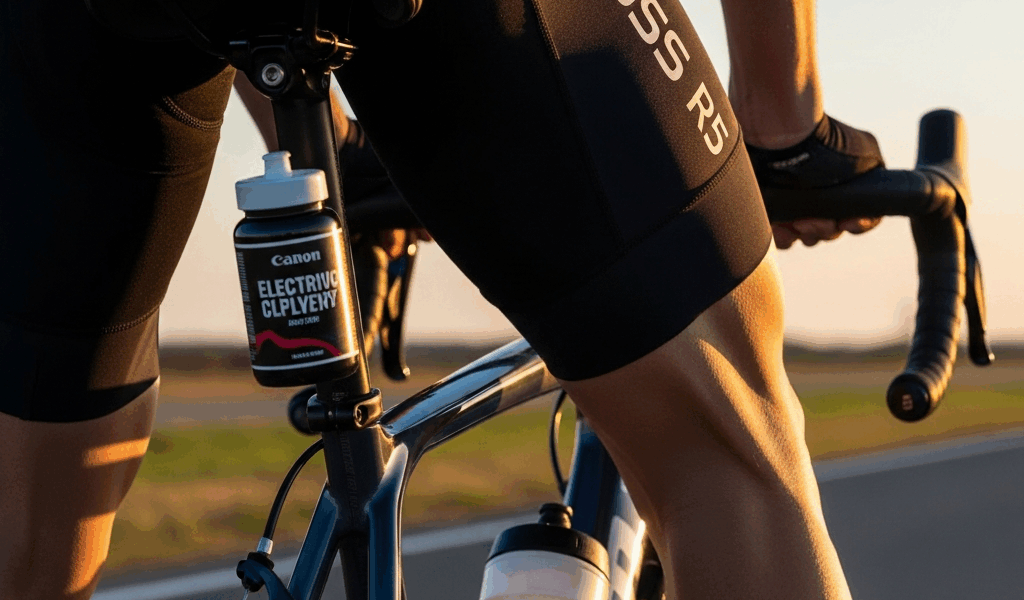
The Hydration Story Is Only Half True
Cycling cramp advice has grown more complex with the conflicting noise flying around. Drink more water. Eat more salt. Pop a sodium tab. And look, that advice isn’t technically wrong — it’s just incomplete in a way that keeps a lot of riders stuck cramping ride after ride.
As someone who spent three full seasons convinced my cramping was purely an electrolyte problem, I got hands-on with this the hard way. I’d roll up to a century ride with a hydration pack stuffed with sports drink, sodium tabs, and two different electrolyte powders. Still cramped. Badly. Mile 67 on a hot July day, my left quad seized so hard I nearly went down on the pavement. I’d drunk close to a gallon of fluid by that point. A gallon.
But what is exercise-associated cramping, really? In essence, it’s a neuromuscular misfiring problem. But it’s much more than that. The hydration myth sticks around because it’s simple and it sells products. Yes, dehydration contributes — particularly in heat above 85°F. The real issue, though, is that your muscles can seize up even when you’re perfectly hydrated because your nervous system is sending the wrong signal entirely. Fatigued muscle fibers misfire. They get overstimulated. Fluid and salt are part of the equation, sure, but cyclists who chase only hydration solutions keep spinning in the same miserable loop.
What actually predicts cramping? Pacing, training volume, and accumulated muscular fatigue over hours. Those three factors matter far more than whatever’s in your bottles.
You Went Out Too Hard in the First Hour
Here’s the part worth saying first. The single most common cramp trigger in long events isn’t nutrition or distance. It’s pacing — specifically, going out way too hot when you feel fresh and the weather’s still cool.
So, without further ado, let’s dive in. At the start of a gran fondo or century, there’s adrenaline everywhere. You feel strong. You’re naturally riding at 85 or 90 percent of max effort before you’ve even noticed. Your legs feel great, of course — you’re not tired yet. That’s the trap.
That early aggression burns through glycogen and stacks up metabolic byproducts faster than your aerobic system can clear them. By mile 40, your quads and calves are already more depleted than they should be at that point in the ride. The nervous system gets irritated. Muscles become hyperexcitable. Around mile 60 or 70 — right on schedule — the cramping starts.
The fix is genuinely counterintuitive: ride embarrassingly easy through the first third of any long event. A pace where you could hold a full conversation about something completely unrelated to cycling. On the Rate of Perceived Exertion scale, that’s roughly 4 or 5 out of 10. Your ego won’t love it. You’ll watch riders pull ahead and disappear. That’s fine. Some of them will be walking their cramps at mile 75.
I’m apparently someone who needs to learn things through suffering, and a 120-mile gravel event in 2022 was my turning point. I committed to RPE 4 for the first 40 miles. Felt like I was barely moving — like I was sandbagging the whole thing. But at mile 60, when chunks of the field started pulling over and stretching, I felt strong. Actually strong. The difference between that ride and my previous crampy centuries? I started roughly 15 to 20 percent slower. That’s it. Learn from what tripped me up of waiting years to figure that out.
Pacing correctly isn’t about being fast early. It’s about having legs when it counts.
Your Training Did Not Match the Distance
There’s a concept that separates riders who finish clean from riders who cramp consistently: specificity. Your legs adapt to the distances you actually ride. If your longest ride in the past eight weeks was 45 miles and you show up to an 85-mile event, your muscles are entering genuinely unfamiliar territory — and they don’t know how to operate that long. That’s what makes this problem so endearing to us cyclists who love to ignore our training logs.
This isn’t a hydration issue. It’s not a pacing issue. It’s a raw adaptation gap. Your neuromuscular system hasn’t learned to sustain effort over 85 miles. Muscle fibers fatigue differently at distances they haven’t seen. The nervous system gets confused. Cramping follows like clockwork.
The rule I use: your longest ride in the three weeks before an event should hit 70 to 80 percent of the event distance. Planning a full century? Get a 70 to 85-mile ride in. Doing a half-century? Ride 35 to 40 miles at least once in those final weeks. Doesn’t need to be fast. Just has to happen.
I’ve ridden with enough local cyclists to know this gap is exactly where most cramping lives. One rider — strong guy, commutes by bike daily — prepped for a 100-mile event with a longest training ride of 52 miles. Cramped at mile 68. Another rider in the same club prepared with an 82-mile ride three weeks out, then tapered properly. Finished strong. Same event. Same July heat. Different training history.
You can’t cramp your way into fitness for distances you haven’t ridden. The preparation has to come first.
What to Do When a Cramp Hits Mid-Ride
You’re already cramping. The preventive stuff doesn’t help you right now. Here’s what actually works in the moment.
First, you should stop and stretch — at least if you can find a safe spot off the road. Get off the bike and apply gentle tension to the cramping muscle for 30 to 45 seconds. Quad cramp? Grab your shoe and pull your heel toward your glute. Calf cramp? Press the ball of your foot against a curb and push your heel down. No bouncing. No forcing it. Just steady, calm tension until the muscle lets go.
If stopping feels risky — heavy traffic, sketchy shoulder, remote gravel section — soft-pedal instead. Drop to your easiest gear and spin at high cadence for two to three minutes. Slower than stretching, but it usually releases the cramp without requiring a full stop.
Now, the pickle juice thing. I’m apparently one of those cyclists who actually carries a small 2-ounce flask of it during events, and it works for me while nothing else ever seemed to work as fast. Some research suggests the mechanism is neurological — a reflex response — rather than anything to do with sodium or hydration. One to two ounces. Thirty to sixty seconds. Costs almost nothing. Tastes genuinely awful. Might save your ride. Worth throwing in your jersey pocket for a dollar’s worth of Vlasic brine.
After the cramp releases, eat something — a Clif Bar, a handful of pretzels, whatever you’ve got. Drink some fluid. Get moving again at a noticeably reduced effort. Your legs just sent a signal. Listen to it.
How to Prevent Cramps on Your Next Event Ride
The week before your event, you’ve got three real levers to pull. Use all of them.
First, write down your pacing plan. Commit to RPE 4 to 5 for the first third of the ride. This isn’t negotiable with yourself. It feels slow because it is slow — and that’s entirely the point.
Second, start your sodium intake before the ride begins. Don’t wait until you’re thirsty or until the sun gets hot. Eat a salty breakfast — eggs, toast with butter, maybe some bacon. Get sodium into your first bottle or nutrition even if it feels unnecessary. Target roughly 300 to 500 milligrams of sodium in that first hour, then 500 to 800 milligrams per hour after that. This primes the system before it needs it.
Third, actually look at your training log for the past six to eight weeks. If your longest ride was significantly shorter than the event, seriously consider rescheduling — or at minimum, accept that cramping is a real risk you’re walking into with open eyes. A 70-percent-distance ride in the final three weeks is the bare minimum bar.
One more thing — probably the most overlooked factor on this whole list. Check your saddle height and cleat alignment. If cramping always hits the same exact muscle — always the right quad, always the left calf — the problem might be fit, not fitness. A sports-specific bike fitter charges somewhere between $150 and $300 depending on the shop. A ruined event you trained months for costs a lot more than that, in ways that are hard to measure.
Your legs can finish strong. They just need the right conditions to get there.

Stay in the loop
Get the latest cycling events today updates delivered to your inbox.