Century Ride Clothing Has Gotten Complicated With All the Generic Advice Flying Around
As someone who has bonked badly on clothing choices across a dozen-plus centuries, I learned everything there is to know about dressing for 100 miles the hard way. Today, I will share it all with you.
My first century was April, outside Columbus. I showed up in a kit built for a brisk morning — arm warmers, a mid-weight jersey, no base layer. By mile 45 I was peeling things off while pedaling and nearly dropped my phone into traffic trying to stuff a rolled-up warmer into an already-packed jersey pocket. Don’t make my mistake.
But what is century kit logic, really? In essence, it’s dressing for five to seven hours across multiple temperature zones while keeping your pockets functional. But it’s much more than that. It’s understanding that moisture which dries in forty minutes on a short ride turns into a chafing disaster by hour five. That a base layer that felt smart at 6 a.m. becomes a wet anchor by mile 60. That fatigue drops your power output — and your body heat — right around the time the wind picks up on exposed stretches.
Short rides forgive bad decisions. A one-hour effort at 55 degrees? Throw on a jersey and some arm warmers, done. A century exposes every miscalculation. That 45-degree start line will feel like 70 degrees by noon. Your three jersey pockets are already carrying gels, a phone, sunscreen, and keys. There’s nowhere to put the gear you need to shed. You can’t turn around at mile 50. You’re in it. That’s what makes century-specific kit logic so different from the generic “layer up” advice most cyclists know and repeat today.
So, without further ado, let’s dive in.
The Base Layer Decision — When You Need One and When You Don’t
Probably should have opened with this section, honestly. It’s where most people go wrong and suffer the most for it.
Below 50 degrees: wear a base layer. Not optional. A merino wool option — something like a Smartwool 150-weight — handles moisture without going clammy the way synthetics can on a six-hour effort. The Castelli Thermoflex works too, but I’m apparently a merino person and Smartwool works for me while the Castelli never quite does on efforts over four hours. Your mileage may vary, genuinely.
50 to 55 degrees is the danger zone. The air feels almost comfortable. Base layer seems like overkill. Then you start sweating around mile 25, and here’s the thing — you can’t take off a base layer mid-ride without stopping completely, unzipping your jersey, and making a whole production of it. A thin merino piece, an Icebreaker 150-weight runs about $65, adds almost nothing to bulk but keeps sweat moving away from your skin. Without it, you’re sitting in moisture for six hours. That is because wet skin against a chamois on a long ride creates friction in places that will remind you of your poor choices for the next three days.
55 to 65 degrees: base layer is optional. Most riders skip it here. If you run warm or expect sustained high effort, leave it out. If you run cold or tend to back off on climbs, include it anyway. Your call.
Above 65 degrees: leave it home. Your goal flips entirely — now you need cooling, not warmth. A base layer becomes dead weight and a heat trap.
Cold Starts and Warming Temps — This Is Where Century Rides Actually Live
Start line is 45 degrees. By noon it’s 72. You cannot wear the same jersey the whole time and stay comfortable. This is the core problem of century kit logic and almost nobody talks about it directly.
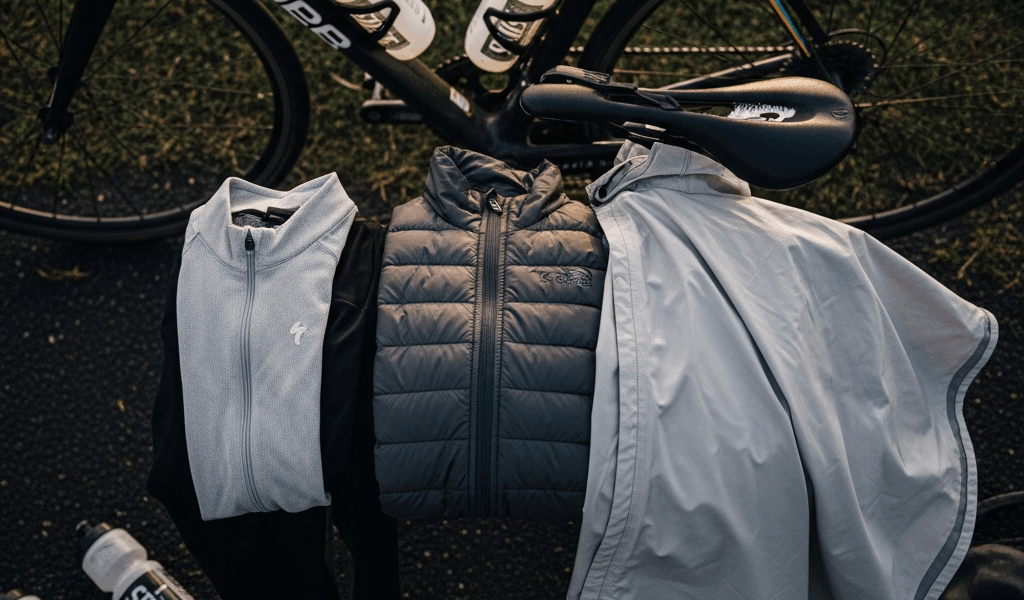
Arm warmers and knee warmers below 55 degrees at the start — non-negotiable. A quality pair packs small enough to roll into a fist-sized ball. The Castelli Nano Flex runs about $45 and stuffs into a jersey pocket without complaint. DeFeet makes a merino version that’s a bit warmer. Either works. The vest is your middle layer option — a lightweight gilet worn over a base layer under your regular jersey creates a breathable sandwich you can strip off halfway through without fully stopping.
The practical problem: pocket real estate. Three jersey pockets holding a phone, four or five gels, keys, and sunscreen leave almost no room. You have three actual solutions here. First option — pack a small silnylon stuff sack in your seat bag, maybe 0.4 ounces, and drop arm warmers into it at mile 40. Works cleanly if your route has rest stops. Second option — time your shedding for a marked checkpoint and leave the gear on the rest stop table. Someone always grabs abandoned warmers. Third option — roll the warmers down to your wrists or tie a vest loosely around your bars. Not elegant. Completely functional when the alternative is overheating for forty miles.
For temperature swings in the 50–70 degree range, arm warmers plus a regular short-sleeve jersey is often the complete answer. Skip the base layer entirely, wear the arm warmers under your jersey at the start, shed them by mile 40 into a pocket or bag. This setup avoids adding a full vest layer while staying genuinely responsive to what’s actually happening outside.
Rain and Wind — Carry the Right Thing Without Wrecking Your Pockets
Frustrated by arriving at century start lines with a vest and watching it pour for six hours, I started actually using weather forecasts two days out — not the morning of. That single habit change fixed most of my rain-related suffering.
Rain probability above 40 percent: carry a lightweight jacket. The Castelli Emergency Rain Jacket is 11 ounces and packs into its own pocket. It lives in a seat bag without taking up meaningful space. Under 40 percent rain chance with wind in the forecast: a slim vest in your seat bag is enough. Put it on at mile 30 if conditions shift.
The real rain problem on a century isn’t getting wet — it’s chamois saturation. Wet chamois for six hours creates chafing that lingers for days after the ride. Assos Chamois Cream applied before the start, not during, makes a real difference. Bag Balm works too and costs about $8 at a farm supply store. Apply it before you leave the house. If sustained rain looks inevitable, shorts with a waterproof chamois panel are worth considering — though they add cost and aren’t necessary unless you’re genuinely riding in a soaker.
Gloves below 55 degrees — merino or synthetic, nothing fancy, just wear them. Cold hands go numb and numb hands can’t shift or brake reliably after hour three. Overshoes are optional on a century unless you’re below 40 degrees or expect prolonged rain. They add weight and bulk for marginal benefit in moderate conditions.
The Night-Before Checklist for Getting Your Kit Right
Lay out your kit based on the forecast. Not on optimism. Not on what you wore last month in similar-seeming weather. The actual forecast.
Under 50°F start
- Base layer — merino wool preferred, Smartwool or Icebreaker 150-weight
- Winter or long-sleeve jersey
- Arm warmers
- Gloves — don’t skip these
- Bib shorts with a quality chamois rated for long efforts
- Wool-blend socks — not cotton, never cotton
- Rain jacket in seat bag if there’s any precipitation chance
50–65°F start
- Base layer — optional but safer than skipping it
- Regular short-sleeve jersey
- Arm warmers or a light vest
- Bib shorts
- Chamois cream applied before leaving
- Sunscreen
- Lightweight rain jacket if forecast shows 30 percent or better rain chance
Above 65°F
- Short-sleeve jersey
- Bib shorts with a premium chamois — this is not the ride for your 45-minute training shorts
- Sunscreen, with a small tube in your jersey pocket for rest stop reapplication
- Lightweight jacket if rain is possible
The three most common mistakes I see — cotton socks that go soggy by mile 30, skipping gloves in 50-degree weather until your hands stop working properly around hour four, and using entry-level road shorts built for an hour-long effort on a ride that takes six. The chamois upgrade matters more than most gear decisions you’ll make.
One more thing. Don’t pack a jacket and then leave it stuffed in your seat bag while you shiver through a cold stretch because you convinced yourself you’d warm up eventually. Commit to wearing it or leave it home — that indecision costs you more than the weight ever would.
You can adapt during the ride. Strip layers, drop arm warmers, tie a vest around your waist if it comes to that. But the riders who suffer least on a century are the ones who thought this through at 9 p.m. the night before. Your hundred miles will test your legs. Don’t let it test your clothing logic at the same time.


Stay in the loop
Get the latest cycling events today updates delivered to your inbox.