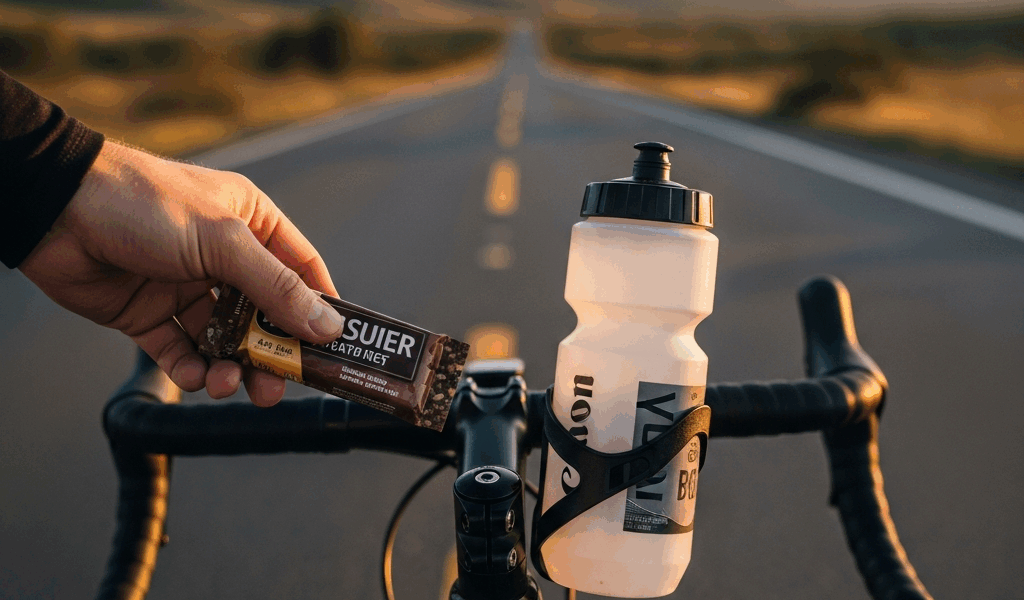
What Actually Happens When You Bonk
Bonking has started getting harder to follow with all the conflicting advice flying around. So let me cut through it fast.
Your legs go dead. Not tired — dead. There’s a wall between you and the pedals that wasn’t there five minutes ago, and suddenly you’re crawling along wondering if you should just get off and walk the rest of it.
But what is bonking, exactly? In essence, it’s your muscles running out of glycogen — the stored carbohydrate fuel your body prefers to burn. But it’s much more than that. Most riders have roughly 90 minutes of glycogen available at moderate effort. Once that’s gone, your body pivots to fat metabolism, which produces energy far more slowly. Your brain runs on glucose too, so bonking feels less like ordinary fatigue and more like a full system shutdown. Foggy head. Legs that feel borrowed from someone else. A pedal stroke that becomes mechanical and desperate.
The thing that separates bonking from regular tiredness is that sudden, wall-like quality. One moment you’re fine. The next moment you’re absolutely not.
The Fueling Mistakes That Cause Most Bonks
I’ve bonked exactly twice in my cycling life. Both times I made the same error — I assumed I could ride harder than my fuel supply would actually allow. Quick callout up front.
The first mistake is showing up underfueled. Plenty of riders roll up to a 7am sportive having eaten a small breakfast three hours earlier, already running low before the gun goes off. Overnight fasting depletes glycogen stores. If dinner the night before was your last real meal, you’re starting 10–15% down before a single pedal stroke happens.
The second mistake is waiting until hunger hits before eating anything. Hunger is a lagging indicator — by the time your stomach signals the problem, your muscles are already in deficit. Long efforts suppress hunger signals anyway. You feel okay. So you don’t eat. The hole gets deeper.
The third mistake — and this one catches fast riders especially — is relying on water alone. Water is necessary. Water is not fuel. A rider drinking 500ml per hour with zero calories is still depleting reserves steadily. At mile 60 of a century ride, that math catches up hard and fast.
Event logistics make all of this worse. A sportive with aid stations every 15 miles sounds frequent until you realize you’re riding 18 mph and those stations were spaced for 12 mph riders. You miss half of them without even trying. A century with stops only at mile 25, 50, and 75 assumes a specific body weight and effort level — probably not yours. Most recreational riders underestimate their fuel needs because they compare themselves to the fast pack rather than their own actual output. Avoid the path I took.
How to Fix Your Fueling Before the Ride
The night before, eat your normal dinner. Add carbs — pasta, rice, potatoes, a couple extra slices of bread. If you’re under 170 pounds, target around 100–150g of carbohydrates. Heavier than that, aim for 150–200g. This isn’t gorging yourself senseless. It’s a deliberate top-up, nothing dramatic.
Morning of the ride, eat 2–3 hours before you start. The target is 200–300g of carbs, though the exact amount shifts based on body weight and available time. A bagel with peanut butter hits around 60–70g. A bowl of oatmeal with honey gets you another 50–60g. Toast, a large banana, a couple of rice cakes — stack it up. Pick something your stomach actually tolerates. Never experiment on race day.
If your ride starts at 7am and eating at 4am makes you nauseous — I’m apparently one of those people, and liquid carbs work for me while solid food at that hour never does — use a drink instead. A 500ml bottle of apple juice, a serving of SiS Go Energy mixed with water, or even a Maurten 160 drink mix gets 100–150g of carbs into your system without the gut distress. Sip it over 15–20 minutes rather than slamming the whole thing.
Thirty minutes before you roll out, drink another 300–400ml of water with electrolytes if possible. Tops up blood volume. Gives your stomach time to settle before the effort starts.
What to Eat and When During a Long Ride
Start eating at 45 minutes in. Not at the first aid station. Not when hunger hits. Not when you feel like you need it. Forty-five minutes. Non-negotiable.
The framework itself is simple: 30–60g of carbs per hour, every hour, for the full duration of the ride. A single gel — something like a Maurten 100 or a SiS Beta Fuel — gives you 25–40g depending on the product. A 500ml bottle of sports drink adds around 30g. A banana is roughly 25–30g. A rice cake with honey sits around 25g. A Clif Bar is 40–45g. Pick foods you’ve actually tested in training, not ones that looked good in the shop.
Here’s a sample fueling plan for a 4-hour ride:
- 45 minutes in: One gel (25g) with 200ml water
- 1 hour 45 minutes: One banana (27g)
- 2 hours 45 minutes: One gel (25g) with 200ml water
- 3 hours 45 minutes: One rice cake with honey or jam (28g)
That’s roughly 105g across four hours — about 26g per hour average. Conservative, sustainable, works for most riders. If you’re heavier, male, or averaging above 18 mph, add a second bottle or an extra gel somewhere in the middle. That’s what makes this framework endearing to us amateur riders — it’s actually adjustable.
The gut issue is real. Eating on the bike feels uncomfortable, especially on climbs, because your stomach and your legs are competing for blood flow. The fix is eating early and often in small amounts rather than cramming a full bar down at mile 50 when you’re already cooked. Small amounts digest easier. Your gut adapts over time too — ride 10–15 training miles with your planned foods a few times before the event. Your stomach will figure it out.
How to Recover Fast If You Bonk Mid-Ride
Stop riding. Not slow down and manage it through — actually stop.
Eat fast carbs immediately. A gel, a handful of gummy bears, a banana, a sports drink. Fifteen to twenty grams minimum, and more is fine here. Then wait 10–15 minutes before you start moving again. Your gut needs time to absorb what you’ve eaten. Your blood glucose needs time to actually climb. Trying to ride through a bonk just digs the hole deeper — effort stays high while fuel absorption stays low. That’s a losing equation.
Once you’re moving again, ride easy. Hold around 60–70% of your normal pace until the fog lifts. That usually takes 20–30 minutes — sometimes longer depending on how deep the hole got. Then reassess. Decide whether continuing makes sense or whether today is done.
Next time, start eating at 45 minutes instead of waiting for that moment to arrive.

Stay in the loop
Get the latest cycling events today updates delivered to your inbox.