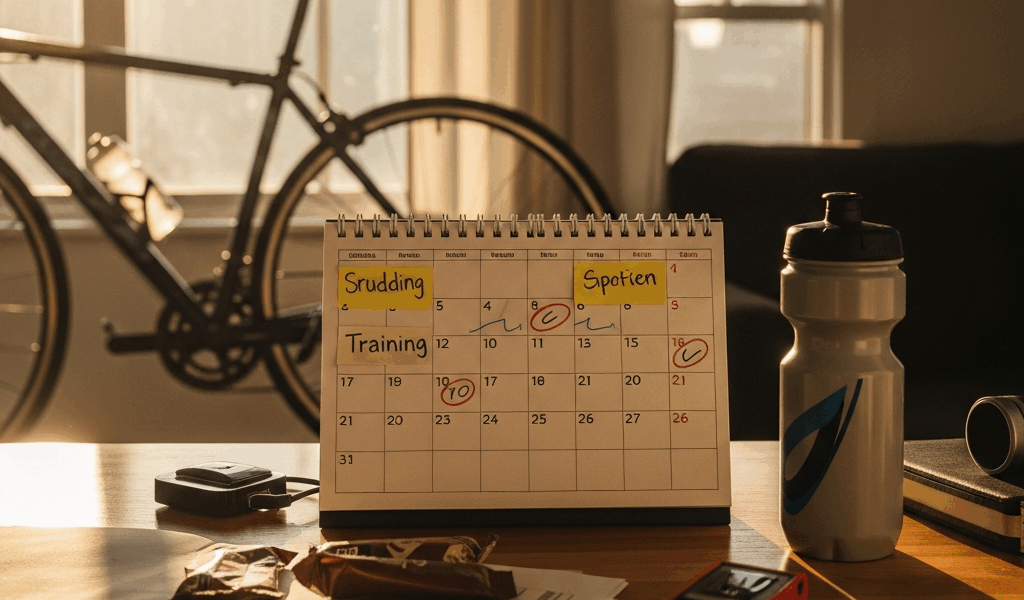
Is 12 Weeks Actually Enough
Century ride training has evolved with all the conflicting advice flying around. So let me just answer the question directly: yes, 12 weeks is enough. But — and this is a big but — it depends entirely on where you’re standing right now.
If you can already knock out 30 miles on a Saturday and feel like a functional human being afterward, you’ve got something to work with. You’re not rebuilding from scratch. The cardiovascular engine exists. The bike handling is there. Twelve weeks is tight, honestly, but it’s workable.
If your longest ride in the past month was 15 miles? Different conversation. A century is 100 miles. That’s not a number you negotiate with. Starting from near-zero and expecting to cover that distance safely in three months isn’t realistic, and I’m not going to pretend otherwise just to keep you scrolling.
Here’s the self-assessment that actually matters: Can you ride 30 miles right now and feel like another 15 wouldn’t kill you? If yes, keep reading — this plan was built for you. If no, you genuinely need more runway. Consider deferring to a spring event and building the base you actually need.
That said, plenty of recreational riders have pulled this off. They panic, they commit, they suffer through the long rides, and they cross the finish line. You can be that person. So, without further ado, let’s dive in.
How to Structure Your 12 Weeks
Throw out the notion of a perfect day-by-day schedule. You won’t follow it exactly anyway — life happens, legs give out, it rains for four days straight in October. Instead, think in three 4-week blocks, each with a specific job to do.
Weeks 1–4: Base Building
Your goal here is consistency and volume tolerance. Not speed. Not suffering. You’re teaching your body to handle weekly mileage without falling apart at the seams.
Target around 100–150 miles per week. One long ride, starting at 40–50 miles. Fill the other four or five days with easy 20–30 mile spins, or just skip a day entirely. No tempo work yet. Everything should feel conversational — the kind of pace where you could chat without gasping.
The 10% rule applies here religiously. Don’t jump from 30 to 45 miles in your long ride. Go 30, then 35, then 40, then 45. Your connective tissues — tendons, ligaments, all the stuff that adapts slower than muscle — need that gradual exposure. Skip this and you’ll spend week five nursing knee pain instead of riding. Don’t repeat what I did.
Weeks 5–8: Endurance Extension
Now you’re building actual century-distance tolerance. Long rides climb to 60–70 miles. Your body gets acquainted with being on the saddle for five, six, sometimes seven hours at a stretch.
Weekly mileage target bumps to 150–200 miles. One long ride, two or three medium rides at 35–45 miles, one or two shorter spins, maybe a rest day thrown in. You can introduce one ride with some moderate intensity here — not hard intervals, just 20 minutes at a pace that feels like work but doesn’t wreck you.
This is where the mental game starts mattering. Long rides get boring. Genuinely boring. I learned this during a 65-mile slog through rural Pennsylvania — it was raining, I had no podcast downloaded, and I had nothing but my own increasingly bleak thoughts for company for three hours. Get a playlist, queue up an audiobook, do something. Whatever keeps you turning the pedals.
Weeks 9–10: Peak Building
One long ride per week climbs to 80–90 miles. You’re in the end zone now. This phase isn’t about comfort — it’s about confirming what sustained effort across six or seven hours actually feels like in your body.
Weekly mileage target: 180–220 miles. Keep one medium ride in there. Fill the rest with easy spinning or genuine rest days. Do not stack multiple hard efforts here. You’re not building anymore — you’re verifying that the foundation holds.
Only skip these big rides if you’re injured or sick. Otherwise, you need that concrete proof. Your brain needs to know it’s been here before.
Weeks 11–12: Taper
More on this later — but the structural point is simple. Cut volume in half. Your body doesn’t get fitter during the ride. It gets fitter during recovery. Give it the time it needs.
Your Long Ride Is the Only Ride That Really Matters
Worth mentioning before anything else.
The long ride is the cornerstone of century prep. Everything else is maintenance. You don’t need sweet-spot intervals or lactate threshold repeats — save that for criteriums or racing road events. For a century, the adaptation you need is simple: moving forward at a steady pace for hours on end. That’s the entire job.
Here’s what the progression looks like week to week:
- Weeks 1–4: Target 40–50 miles. Start at 40. If that feels solid and not completely devastating, bump to 45 the following week, then 50.
- Weeks 5–8: Target 60–70 miles. This is the endurance foundation. You’re teaching your body to function on dwindling glycogen and legs that stopped feeling fresh around mile 35.
- Weeks 9–10: Peak at 80–90 miles. The hardest part emotionally. It stops feeling like training and starts feeling like suffering. That’s actually the point.
- Week 11: Step back to 50 miles, easy pace. No heroics.
- Week 12: 20–30 miles total, very easy, broken into two or three short rides across the week.
Do you need to ride the full 100 before race day? No. This surprises people every time. An 80-mile ride in the bank gives you legitimate confidence. Ninety gives you more. But riding 100 miles in training one or two weeks before a century race is asking for an overtrained body and a miserable race experience. The adaptation happens during recovery — not during the ride itself.
What Most People Get Wrong in the Last 4 Weeks
This is where solid plans fall apart. Four specific mistakes show up over and over.
Mistake One: Skipping the Taper Because You Feel Undertrained
Here’s the honest truth: you probably are undertrained. So is almost everyone who signed up 12 weeks out. The taper is not the moment to catch up — it’s when your nervous system and muscles finally complete their recovery. That’s when the fitness you’ve been building actually consolidates into real performance capacity.
Panic-training in week 11 just means you show up to the race tired. Extra miles won’t fix what extra rest would.
Mistake Two: Doing a Massive Ride the Week Before
I’ve seen riders log 70-mile training rides five days before a century. Then they show up race morning with heavy legs, blame the training plan, and limp through the back half. Week 12 is 20–30 miles total — spread across multiple easy rides, nothing hard, nothing long. You’re keeping the legs loose. You are not training.
Mistake Three: Not Practicing Your Nutrition Strategy Until Race Day
Probably the biggest saboteur on this entire list. You cannot figure out gels versus bars, which sports drink mix your stomach actually tolerates, and whether real food sits okay at mile 65 — during the actual century. That’s a disaster that costs you an hour minimum, sometimes a DNF.
Every long ride over 60 miles is a nutrition rehearsal. Eat exactly what you plan to eat on race day. A workable starting point: sports drink on the bike the entire time, one gel or energy bar every 45 minutes starting around mile 20, one substantial real-food option — banana, rice cakes, a peanut butter sandwich cut into quarters — somewhere around mile 50. Know what works before the day you need it to work.
Mistake Four: Ignoring Recovery Between Long Rides
The day after a 70-mile ride is not the day to hammer a hard 40-miler. Rest day. Or an easy 20 miles at a pace where full sentences come out without gasping. Your muscles need at least 48 hours to absorb the work you’ve done. Train too aggressively too soon after a long effort and you’re accumulating fatigue — not fitness. There’s a difference, and it shows up on race day.
Race Week and the Final Checklist
Total mileage for race week: 40–50 miles across the entire seven days. That’s it. Short easy rides. Thursday or Friday, do a 15-minute spin with three or four 30-second pickups at race pace, then cool down completely. Nothing more. This keeps your legs alert without digging into recovery.
Nutrition Strategy Lock-In
By now you know what your stomach handles and what it doesn’t. Write it down — literally, on paper or your phone notes. How many gels, what flavors, what drink mix, where the aid stations fall on the route. Show up race morning with zero guesswork on the nutrition side. That mental bandwidth belongs elsewhere.
Night-Before Checklist
- Bike clean, drivetrain lubed, tires inflated to proper pressure — typically 80–100 psi depending on tire width and your weight.
- Nutrition and hydration packed and staged: jersey pockets loaded, handlebar bag ready if you’re running one.
- Start time confirmed, parking location identified, route downloaded to your Garmin or Wahoo or printed if you’re old school about it.
- Full kit laid out the night before: bib shorts, jersey, socks, shoes, helmet, sunglasses, sunscreen. I’m apparently someone who forgets socks at least twice a season — a Garmin Edge 530 reminder does not help me — and fumbling around at 5:45 a.m. looking for matching socks is not how you want race morning to start.
- Breakfast locked in — something you’ve eaten before previous long rides, at roughly the same time you’ll eat it race morning, that didn’t cause any digestive issues. This is not the day to try something new.
That’s what makes this whole process endearing to us cyclists, honestly — the obsessive preparation, the spreadsheets, the pre-packed jersey pockets sitting by the door the night before. You’ve done the work. Twelve weeks of consistent riding, building from 30 miles out to 80 or 90. Your body has been here. The race is just pacing, nutrition, and showing up fresh.
You’re ready. Finish strong.



Stay in the loop
Get the latest cycling events today updates delivered to your inbox.