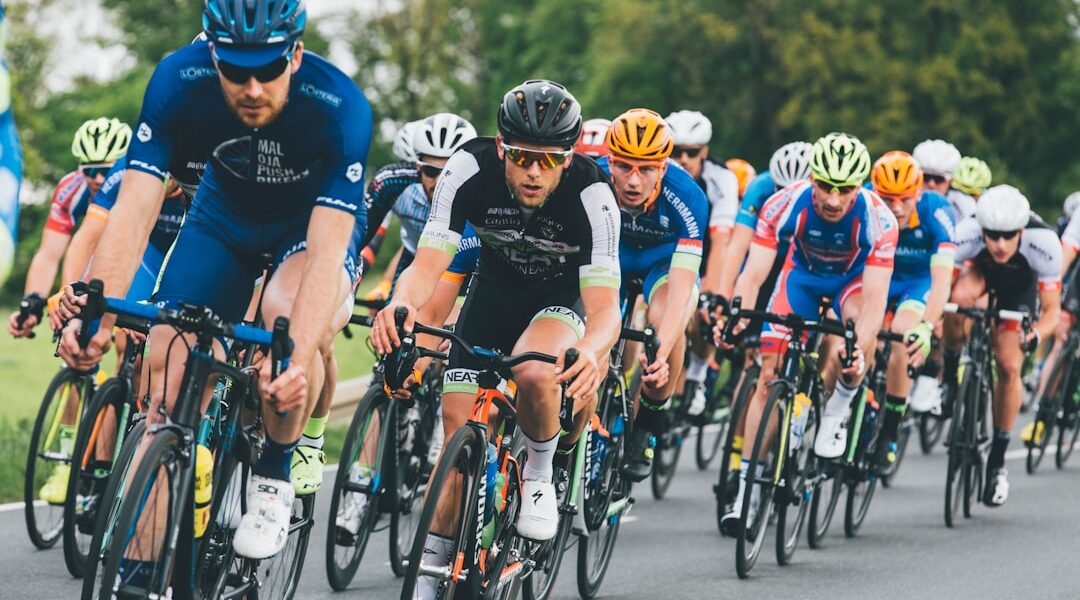
I’ve been obsessed with the Tour de France since I accidentally caught a mountain stage on TV about twelve years ago. I had no idea what was happening — why were some guys in yellow, who was attacking, why was everyone yelling in French? Didn’t matter. By the time the stage winner crossed the line with his arms up, barely able to stay on the bike, I was hooked. Haven’t missed a Tour since.
Let me tell you everything I know about this race, because once you understand how it works, you’ll be just as obsessed.
The Basics
The Tour runs every July, lasts three weeks, and covers roughly 3,500 kilometers across 21 stages. The route changes every year, but it always finishes in Paris on the Champs-Elysees, which is one of the best traditions in all of sports. The stages mix everything together — flat roads perfect for sprinters, mountain passes that break climbers, and time trials where riders race alone against the clock.
Fun fact: the whole thing started back in 1903 because a newspaper editor named Henri Desgrange wanted to sell more copies of his paper, L’Auto. He basically invented the hardest bike race on earth as a marketing gimmick. It worked, obviously.
The Jerseys
This is where people get confused at first, so let me break it down simply. There are four main jerseys, and each one means something different.
The yellow jersey (maillot jaune) goes to the rider with the lowest overall time. This is the big one. Everything revolves around it. The green jersey is for the best sprinter — points accumulated at intermediate sprints and stage finishes. The polka dot jersey goes to the best climber, based on points at the top of categorized climbs. And the white jersey is for the best rider under 25.
What most people miss is how much these jerseys affect team strategy. A team might spend an entire stage working to protect their leader’s yellow jersey, sacrificing their own chances just to keep him safe in the pack. Or a sprinter’s team will control the pace for 200 kilometers just to set up a 15-second sprint finish. In my experience, the tactical side is what separates casual viewers from people who really get the sport.
What It Takes to Run This Thing
The logistics behind the Tour are staggering. Each team brings a full squad of riders, plus managers, coaches, mechanics, soigneurs (the people who make food bags and give post-stage massages), and bus drivers. On top of that, there’s a massive caravan of organizers, timekeepers, TV crews, motorcycle camera operators, medical staff, and police escorts. The whole operation moves across France like a traveling city. I saw a breakdown once that said the Tour uses something like 4,500 people just to make it happen. That’s before you count the millions of fans lining the roads.
Probably should have led with this section, honestly. The scale of the Tour is half the reason it’s so incredible. This isn’t just a bike race. It’s a moving festival that takes over an entire country for three weeks.
The Heroes and the Scandals
The Tour has produced some of the greatest athletes cycling has ever seen. Eddy Merckx won it five times and is still considered the greatest cyclist of all time by most people who follow the sport. Jacques Anquetil was the first to win five. Miguel Indurain won five consecutive Tours in the ’90s with this robotic, unstoppable consistency that was almost eerie to watch.
And then there’s the other side. Lance Armstrong won seven Tours and had every one of them stripped after the doping scandal came out. That was a dark period for the sport, and anyone who followed cycling through those years carries some complicated feelings about it. I remember watching Armstrong race and thinking nobody could be that dominant. Turns out, yeah, there was a reason.
But the sport moved forward. The current generation of riders — Pogacar, Vingegaard, Evenepoel — are producing racing that’s as exciting as anything in Tour history. Clean racing, real rivalries, genuine drama.
Why You Should Watch
That’s what makes the Tour de France endearing to us cycling fans. It’s three weeks of storytelling told at 25 miles per hour through some of the most beautiful countryside on earth. You get underdog stories, breakaway artists, team tactics that play out like chess matches, and mountain stages that look like something from a movie.
If you’ve never watched a full Tour, start with the mountain stages. Find the Alps or Pyrenees stages, settle in, and give it a shot. You won’t understand everything at first, but you’ll feel the tension. And that’s enough to get you started.
Recommended Cycling Gear
Garmin Edge 1040 GPS Bike Computer – $549.00
Premium GPS with advanced navigation.
Park Tool Bicycle Repair Stand – $259.95
Professional-grade home mechanic stand.
As an Amazon Associate, we earn from qualifying purchases.

Leave a Reply