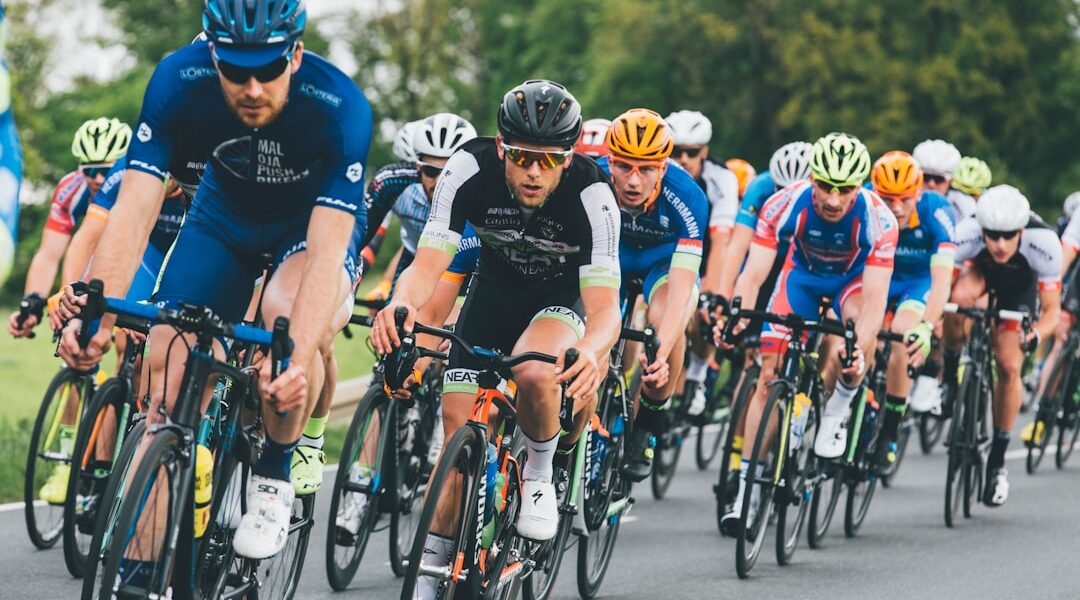
Ultra cycling is one of those things that sounds like a bad idea until you talk to someone who’s done it. Then it still sounds like a bad idea, but you can’t stop thinking about it. I’ve been around endurance riding long enough to know a few people who’ve crossed over into the ultra world, and the stories they tell are equal parts inspiring and terrifying.
We’re talking about events where the distance starts around 200 kilometers and goes up from there — way up. Some of these races cover over 3,000 kilometers. That’s not a typo. People actually ride that far on a bicycle, and they do it across deserts, mountain ranges, and everything in between.
What Makes Ultra Cycling Different
A normal bike race is hard. An ultra event is a completely different category of hard. You’re not just managing your legs and lungs — you’re managing sleep, food, mechanics, weather, and your own sanity over multiple days. I’ve found that the people who succeed at ultra events aren’t always the strongest riders. They’re the ones who can solve problems while exhausted, eat when they don’t feel like eating, and keep pedaling when their brain is screaming at them to stop.
The formats vary a lot too. Some events are time-based — ride as far as you can in 12, 24, or 48 hours. Others are point-to-point or loop courses where you have to cover a fixed distance as fast as possible. Some races give you a full support crew with a follow car, spare wheels, and someone handing you food at set intervals. Others are completely unsupported, meaning you carry everything you need on your bike and figure the rest out on your own.
The unsupported events are the ones that really get my attention. Imagine riding 600 miles with everything strapped to your frame, navigating by GPS, and managing your own sleep schedule. A buddy of mine did a 1,200K brevet last year and slept a total of four hours across three days. He told me he hallucinated a cow in the road around hour 50. There was no cow.
Why People Do This
Here’s what most people miss about ultra cycling: it’s not just suffering for the sake of suffering. The riders I’ve talked to all describe these events as some of the most meaningful experiences of their lives. When you strip everything away — no phone, no distractions, just you and the road for days on end — something shifts. You learn things about yourself that you can’t learn any other way.
And the scenery matters more than you’d think. Ultra events take riders through remote, beautiful landscapes that most people never see. Mountain passes at sunrise, empty desert highways at midnight, coastal roads with nobody else around. In my experience, these moments are what stick with riders long after the soreness fades.
The camaraderie is real, too. You’d think riding alone for days would be isolating, but there’s this bond between ultra cyclists. You meet someone at a checkpoint at 3 AM, both of you barely functional, and you understand each other immediately. No explanation needed.
Training for the Absurd
Training for an ultra event is nothing like training for a regular race. You need to log serious hours in the saddle — not fast hours, but long hours. Your body needs to adapt to sitting on a bike for 15, 18, 20 hours at a stretch. That alone takes months of buildup.
Then there’s the nutrition side, which gets complicated fast. Your body’s needs change dramatically over extended efforts. What works at hour two might make you nauseous at hour twelve. I’ve watched riders try to figure out their nutrition strategy mid-race and it rarely goes well. You need to have that dialed before the start line.
Probably should have led with this section, honestly. The training commitment is what separates people who dream about ultra cycling from people who actually do it.
Sleep management is another layer. Some riders train themselves to function on micro-naps — 20 minutes on the side of the road before getting back on the bike. Others push through entire nights. Neither approach is pretty.
Not for Everyone, But Maybe for You
That’s what makes ultra cycling endearing to us endurance junkies. It takes everything you think you know about your limits and throws it out the window. These events aren’t races in the traditional sense. They’re journeys that happen to have a start and finish line.
If any of this sounds appealing — even if it also sounds slightly insane — you might be the type. Start with a 200K and see how it feels. If you get to the end and your first thought is “I could go farther,” well, welcome to the club.
Recommended Cycling Gear
Garmin Edge 1040 GPS Bike Computer – $549.00
Premium GPS with advanced navigation.
Park Tool Bicycle Repair Stand – $259.95
Professional-grade home mechanic stand.
As an Amazon Associate, we earn from qualifying purchases.

Leave a Reply