The world of cycling sports has gotten complicated with all the disciplines flying around. As someone who’s dabbled in road racing, mountain biking, and even suffered through a cyclocross season, I learned everything there is to know about the different ways people ride bikes competitively. Today, I will share it all with you.
When people say “cycling,” they usually picture someone in lycra on a road bike. But the sport has so many branches that you could spend a lifetime exploring them and still find something new. Let me walk through the ones that matter most.
Road Cycling
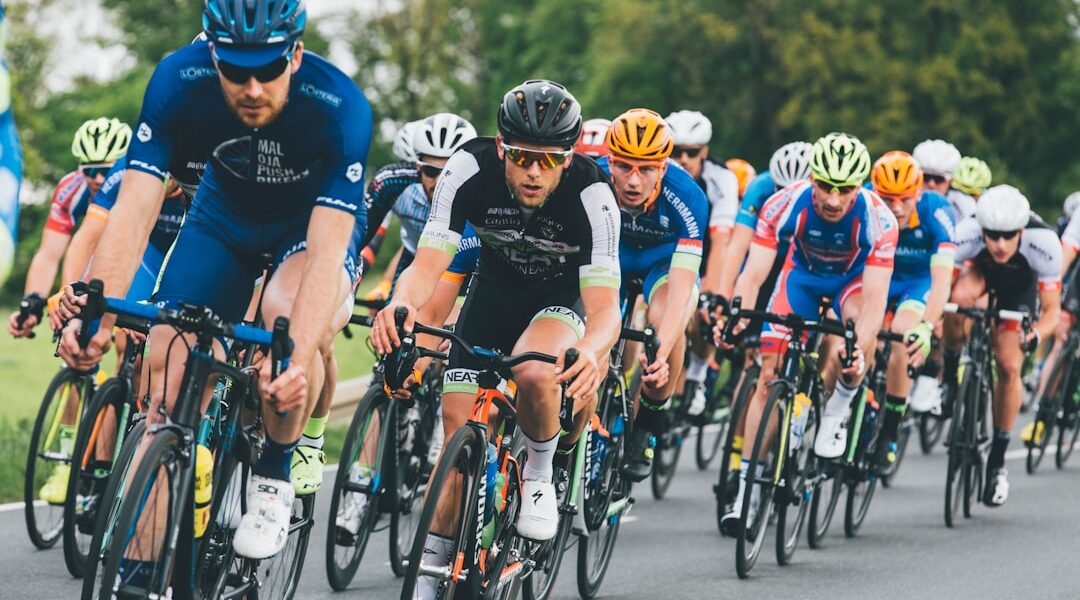
This is home base for most of us. Road bikes, paved roads, and the urge to go fast. I got into cycling through road riding, and it’s still where I spend most of my saddle time. The range is massive — you’ve got local criteriums (short, fast, technical races around a few city blocks) all the way up to three-week grand tours like the Tour de France, the Giro d’Italia, and the Vuelta a Espana.
What I love about road cycling is that it scales to wherever you are. You can race, you can ride centuries, you can just spin easy on a Sunday morning. The bike does whatever you want it to do. In my experience, it’s the best entry point into the sport because the learning curve is gentle and the community is everywhere.
Mountain Biking
If road cycling is chess, mountain biking is a bar fight. You’re off pavement, dealing with roots, rocks, drops, loose dirt, and whatever else the trail throws at you. There are a bunch of sub-disciplines too — cross-country (XC) for the endurance riders, downhill (DH) for the adrenaline junkies, enduro for the people who want a bit of both, and freeride for anyone who thinks gravity is a suggestion.
I tried a downhill race once. Once. Came in dead last and had the biggest smile on my face. The skill ceiling in mountain biking is absurdly high, and watching top-level riders flow through technical terrain is like watching someone speak a language you don’t know.
Track Cycling
Velodrome racing is a different beast entirely. Fixed gear bikes, no brakes, banked tracks, and speeds that would terrify most people. Sprints, pursuits, keirin, madison — each event has its own tactical puzzle. The keirin in particular is wild to watch. Riders draft behind a motorized pacer that gradually speeds up, and then it pulls off and six riders try to outfox each other for the finish.
Track cycling is an Olympic mainstay, and for good reason. It’s pure, raw speed with nowhere to hide. If you ever get a chance to watch a session at a velodrome in person, take it. TV doesn’t capture how fast these riders are moving.
Cyclocross
Fall and winter racing in mud, grass, sand, and whatever else nature can muster. Cyclocross is beautiful chaos. The bikes look like road bikes but with knobby tires and wider clearances. And here’s the kicker — there are barriers on the course that force you to jump off your bike, pick it up, run with it, and remount. While racing. While covered in mud.
Probably should have led with this section, honestly. Cyclocross is where I had the most fun I’ve ever had on a bike. The atmosphere is like a party. People bring cowbells, beer, and costumes. The racing is frantic and messy. I’ve wiped out in mud pits, dropped my chain on remounts, and laughed the entire time.
BMX
BMX started in California in the late ’60s and never lost its edge. Racing BMX is eight riders on a short dirt track with jumps and banked corners, and the whole thing takes about 40 seconds. It’s sprint-and-survive racing at its finest. It became an Olympic sport in 2008, which brought a whole new generation into it.
Freestyle BMX is the other side — riders doing tricks on ramps, rails, and flatland. The creativity in freestyle is unreal. If you’ve ever watched a park session, you know these riders see obstacles completely differently than the rest of us.
Time Trials
The “race of truth.” No drafting, no tactics, no teammates — just you against the clock over a set distance. Riders use aero bars, skin suits, aero helmets, and every other marginal gain they can find to shave seconds. I’ve found that time trials are the most honest form of racing. There’s nobody to blame but yourself if the result isn’t what you wanted.
It’s also where you see some of the most specialized equipment in cycling. The bikes look like they were designed by NASA, and riders contort themselves into positions that look painful just to cut drag.
Triathlon
Not purely a cycling sport, but cycling is the longest leg and often where races are won or lost. Triathletes use time trial bikes and race solo (no drafting in most formats). The distances range from sprint triathlons to full Ironman races, which include a 112-mile bike leg. I have friends who do Ironmans and I genuinely don’t understand where they find the willpower. The bike alone would wreck most people.
Ultra-Distance Cycling
If a century isn’t enough, there’s always ultra-distance. Races like the Race Across America (RAAM) cover thousands of miles and take days to complete. Riders manage sleep deprivation, navigation, weather, and their own bodies breaking down over extreme distances. It’s endurance sport pushed to its absolute limit. I watched a documentary about RAAM once and my legs hurt for two days just from watching.
Indoor Cycling
Platforms like Zwift turned indoor training from a boring necessity into something people actually enjoy. You can race, do structured workouts, or just spin easy while watching the virtual scenery go by. I use Zwift during winter months when the roads are icy, and while it doesn’t replace outdoor riding, it keeps the fitness from disappearing completely.
Gravel Cycling
This is the newest kid on the block and it’s growing fast. Gravel bikes split the difference between road and mountain bikes, and gravel events — often called gravel grinders — take riders on dirt roads, back roads, and everything in between. The appeal is exploration. You’re riding places cars don’t go and road bikes can’t handle. What most people miss about gravel riding is that it’s less about competition and more about the adventure of finding new terrain.
That’s what makes the variety of cycling disciplines endearing to us bike nerds. There’s always something new to try, always another way to ride, and always a community of people doing it. Pick the one that speaks to you and go for it. Or try all of them. Your legs can handle it. Probably.
Recommended Cycling Gear
Garmin Edge 1040 GPS Bike Computer – $549.00
Premium GPS with advanced navigation.
Park Tool Bicycle Repair Stand – $259.95
Professional-grade home mechanic stand.
As an Amazon Associate, we earn from qualifying purchases.


Leave a Reply