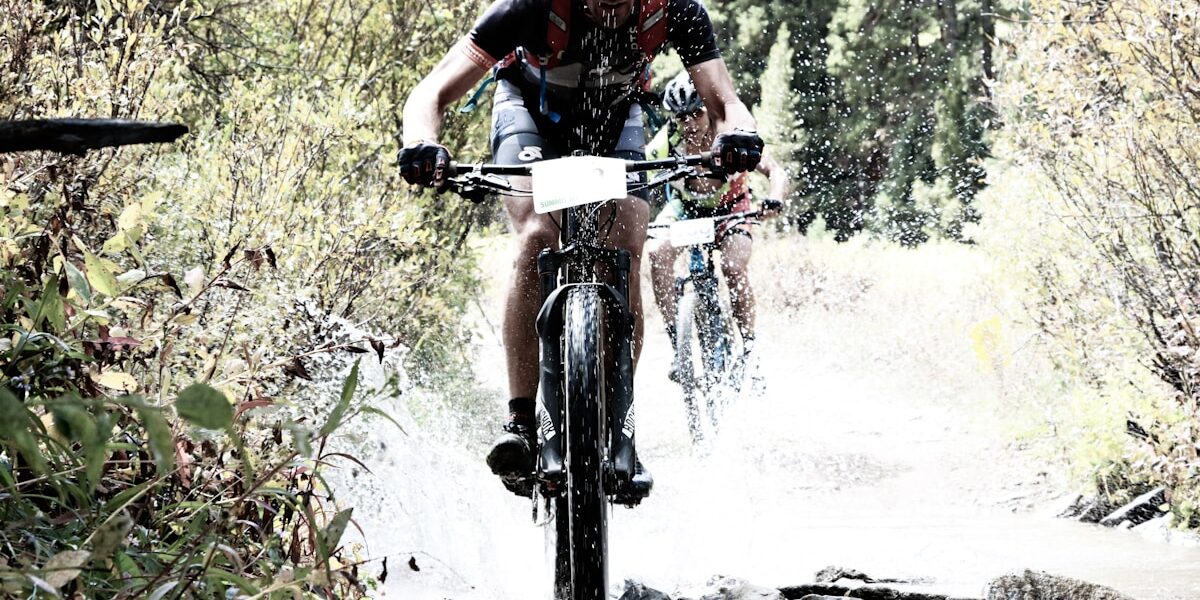
The best first cycling challenge is usually a supported ride—not a mass-start race. Look for a 15–40 mile route, clear course markings, rest stops, mechanical support, generous cutoff times, and a noncompetitive or untimed format. Once you can ride comfortably in a group and handle the distance, a novice road, criterium, gravel, cyclocross, or mountain-bike race becomes a sensible next step.
“Bike race” and “cycling event” are often used interchangeably online, but the experience is very different. A charity ride or gran fondo may time participants while still emphasizing completion. A sanctioned race places you in a competitive field governed by rules, categories, officials, and results. Choose the experience you actually want rather than the most famous event name.
Beginner cycling challenges compared
| Event type | Good first goal | What makes it beginner-friendly | Main difficulty |
|---|---|---|---|
| Local supported ride | 15–30 miles | Rest stops, route signs, SAG support, no placing | Learning group etiquette and pacing |
| Charity ride | 20–40 mile route option | Multiple distances and organized support | Possible fundraising requirement |
| Recreational gran fondo | Shortest published route | Festival atmosphere and aid stations | Climbing, crowds, cutoff times |
| Novice road race | Beginner/category field | Separate category and sanctioned rules | Pack handling and sustained speed |
| Beginner mountain-bike race | Short course with modest technical rating | Wave or category start | Terrain and passing safely |
| Gravel event | Shortest supported distance | Lower traffic and flexible formats | Surface, navigation, punctures, remoteness |
Ride or race: decide this first
Choose a supported ride when…
- Your goal is to finish rather than place.
- You have limited experience riding close to other cyclists.
- You want rest stops, mechanical help, and a clearly marked route.
- You would prefer several distance choices or the ability to shorten the day.
Choose a novice race when…
- You can hold your line, look behind without swerving, corner predictably, and drink while moving.
- You understand the event’s category, license, equipment, number-placement, and course rules.
- You are comfortable with riders passing closely and with the possibility of being dropped.
- You want competition, not simply a challenging group ride.
USA Cycling’s first-time racer guide directs beginners toward sanctioned events and novice categories and explains practical details such as bib placement and speaking with officials. Use the organizer’s technical guide and the current USA Cycling rules for the actual event; a general article cannot replace them.
Four realistic first-event examples
Event formats and routes change. The examples below illustrate useful beginner features, not a permanent ranking or promise that every edition will suit every rider.
1. A Bike New York local ride
Bike New York describes its local rides as casual, small-scale events for riders of all skill levels. That is a lower-pressure entry point than traveling immediately to its giant Five Boro event. Its route-overview page has included a 17-mile Twin Lights option and other short regional routes, although schedules and distances must be checked for the current year.
Best for: learning event check-in, route following, and group etiquette without race pressure.
2. A shorter Bike MS route
Bike MS events commonly offer multiple route choices and on-course support. The official 2026 Coast the Coast details, for example, listed 25-, 50-, 75-, and 100-mile options and allowed riders to switch distance on ride day. Other Bike MS events have different distances, fundraising rules, and logistics.
Best for: riders ready for 25–40 supported miles and comfortable meeting any fundraising commitment.
3. El Tour de Tucson’s shortest route or Fun Ride
The official 2026 El Tour de Tucson route page lists 32-, 62-, and 102-mile main routes plus Fun Ride options. A 32-mile event is not automatically easy—heat, climbing, wind, crowds, and cutoff policy still matter—but the distance ladder gives riders a progression path without pretending a century is beginner level.
Best for: a rider who has completed comparable training mileage and wants a large event atmosphere.
4. Sea Otter recreational rides
The Sea Otter Classic separates competitive disciplines from untimed recreational rides. Its official site describes two road gran fondos and an off-road tour with multiple distances. The exact elevation, surface, age rules, e-bike policy, and cutoff details should determine whether a particular route fits you.
Best for: riders who want a cycling festival and can choose a route matching their road or off-road skills.
What about the Five Boro Bike Tour?
The TD Five Boro Bike Tour is a 40-mile, traffic-free New York City ride, not a conventional race. Bike New York permits a broad range of human-powered cycles and Class 1 pedal-assist e-bikes, uses start waves, provides rest-area and SAG support, and offers an official rental partner. The distance and bridge climbs still require preparation, and the huge field creates crowd-handling demands that a small local ride does not.
Good first major event? Yes, for someone who has trained to ride 40 miles and can move predictably in a dense group. It is not the ideal place to learn basic braking, shifting, or straight-line riding.
How to tell whether an event is truly beginner-friendly
Ignore vague marketing and find these details in the organizer’s current rider guide:
- Distance and elevation: climbing can make 25 miles harder than a flat 40.
- Minimum pace or cutoff: calculate whether your training pace includes stops.
- Surface: paved, gravel, singletrack, and mixed-surface routes need different skills and tires.
- Traffic control: “marked route” does not necessarily mean closed roads.
- Support: check aid-station spacing, SAG policy, mechanical help, and emergency contact method.
- Field format: mass start, waves, rolling start, category start, or self-seeded corrals.
- Equipment rules: helmet, lights, bar type, e-bike class, trailers, and headphones.
- Refund and weather policy: many entry fees are nonrefundable even if conditions change.
An eight-week first-event framework
This is a general progression for a healthy rider already comfortable cycling; it is not individualized medical or coaching advice.
- Weeks 1–2: ride two or three times weekly and establish a comfortable longest ride.
- Weeks 3–4: extend the long ride gradually and practice eating, drinking, shifting, and fixing a flat.
- Weeks 5–6: include terrain resembling the event and complete at least one small group ride.
- Week 7: reach most of the target duration without finishing exhausted; test all clothing and equipment.
- Week 8: reduce volume, inspect the bike, review the route and rider guide, and arrive rested.
Stop and seek appropriate professional advice for chest pain, faintness, unusual shortness of breath, or an injury that changes your movement. A first event is not worth overriding warning signs.
Race-day checklist
- Bike inspected, tires checked, chain lubricated, brakes functioning
- Helmet, number, timing chip if used, identification, and required license
- Water and familiar food matched to aid-station spacing
- Tube or repair kit appropriate to the wheel and tire system
- Route downloaded, emergency number saved, weather checked
- Travel, parking, packet pickup, and finish transportation confirmed
Frequently asked questions
How long should a first cycling event be?
Choose a distance close to what you can already complete comfortably in training. For many newer riders that means 15–40 miles, but terrain, elevation, surface, weather, and cutoff pace matter more than a universal number.
Do I need a road bike?
Not always. Many recreational rides allow hybrids, recumbents, tandems, or permitted e-bikes. Competitive events may restrict equipment. Read the organizer’s current rules before registering, and use our bicycle-by-riding-style guide to match the bike category to your normal terrain.
Can a beginner enter a real bike race?
Yes. Use a novice category at a sanctioned event and learn the discipline’s group-riding and course skills first. A race is less forgiving than a supported ride when basic handling is uncertain.
Related event-planning guides
- Choose an event for your current fitness
- Find local cycling events
- Cycling event registration guide
- U.S. cycling events to compare
Official sources
- USA Cycling: First Time Racer Guide
- Bike New York: TD Five Boro Bike Tour
- Bike New York: current events and local rides
- National MS Society: 2026 Coast the Coast route details
- El Tour de Tucson: current routes
- Sea Otter Classic: current races and recreational rides
Fact-checked August 2026. Event dates, distances, routes, entry rules, and support can change; confirm every detail with the organizer before registering or traveling.

Stay in the loop
Get the latest cycling events today updates delivered to your inbox.