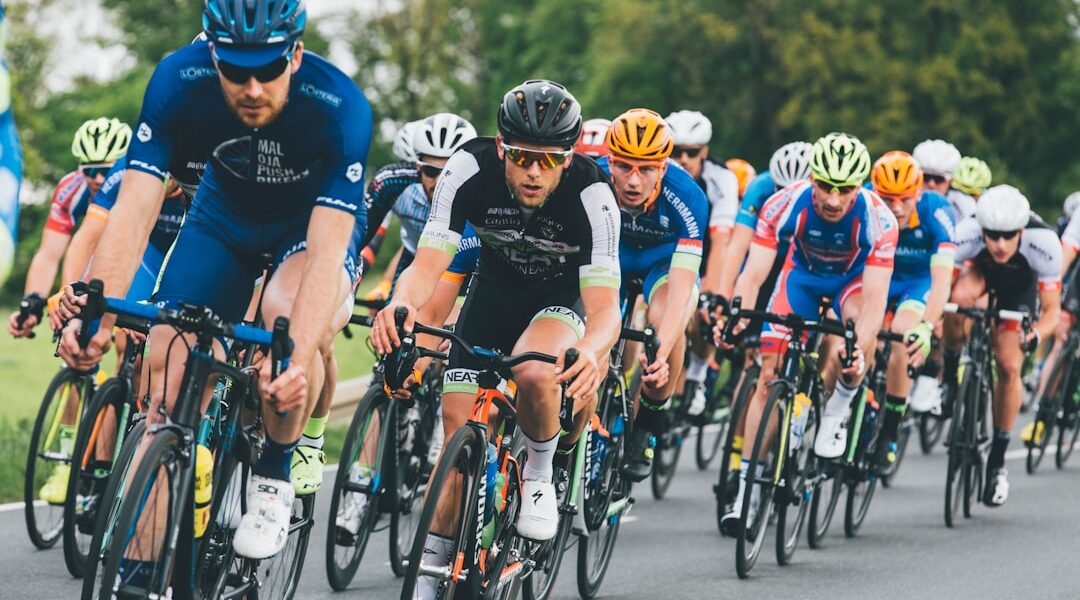
Someone asked me at a barbecue last summer if cycling was “really a sport.” I almost choked on my burger. After years of racing, training plans, cracked helmets, and enough saddle sores to fill a medical textbook, I can confirm — yes, cycling is very much a sport. And I’ve got some strong opinions about why.
Let me lay it out for you, from the history to the different disciplines to what it actually takes to compete.
A Quick History Lesson
The first documented bike race happened in Paris in 1868. It was a 200-meter dash in a park. Two hundred meters. That’s basically a parking lot. But it started something. By the 1880s, the safety bicycle came along (lower to the ground, two equal-sized wheels, way more stable), and suddenly everyone wanted to race. The sport exploded across Europe and America, and it hasn’t slowed down since.
I find it kind of hilarious that competitive cycling started as this tiny sprint in a park and turned into events that cover thousands of kilometers over three weeks. The ambition escalated quickly.
Road Cycling — The Big Stage
This is where most of the prestige lives. The Tour de France, Giro d’Italia, and Vuelta a Espana are the three grand tours, and they’re among the hardest athletic events on the planet. Three weeks of racing, mountain passes that would make your car’s transmission nervous, flat stages where sprinters hit 45 mph in a bunch finish.
What most people miss is the team dynamic. Road cycling looks like an individual sport from the outside, but it’s deeply collaborative. Teammates sacrifice themselves to protect the leader, control the pace, chase breakaways, and set up the final sprint. I’ve watched riders empty their tanks completely just to deliver their sprinter to the final 200 meters with a clear shot at the win. That kind of selflessness is rare in sports.
Track Cycling — Speed With Strategy
Velodrome racing is its own world. Banked wooden tracks, fixed-gear bikes with no brakes, and speeds that push 50 mph in the sprints. The events range from individual sprints (two riders playing cat-and-mouse for three laps before exploding into a full sprint) to team pursuits (four riders rotating in a perfect paceline) to the keirin (six riders drafting a motorized pacer before it pulls off and chaos ensues).
I watched a keirin final at the Olympics once and I’m not sure I breathed for the entire last lap. The positioning, the timing, the nerve it takes to hold your sprint until exactly the right moment — it’s a psychological game as much as a physical one.
Mountain Biking — Controlled Chaos
If road cycling is refined, mountain biking is raw. You’re off pavement, on trails full of rocks, roots, drops, and whatever else the terrain throws at you. Cross-country racing demands endurance. Downhill demands guts and technical precision on descents that would make most people walk their bikes. Enduro combines both.
I tried a mountain bike race a few years ago after being exclusively a road cyclist. My bike handling skills were humbling. Watching a good mountain biker flow through technical terrain is like watching someone speak a language fluently while you’re still stumbling over the basics.
Cyclocross — The Beautiful Mess
This is my favorite discipline to watch, hands down. Cyclocross races happen in fall and winter, on mixed terrain — grass, mud, sand, pavement, and whatever else the course designers felt like throwing in. There are barriers on the course that force riders to dismount, shoulder their bikes, run over the obstacle, and remount. While racing. In the rain.
Probably should have led with this section, honestly. Cyclocross is the sport that converts non-cycling fans. The races are short (about an hour), they’re spectator-friendly (the courses loop back on themselves so you can see riders multiple times), and the conditions make everything unpredictable. I’ve seen leaders crash out in mud pits while riders in tenth place end up winning. It’s great.
The Mental Side
Here’s something that doesn’t get talked about enough: cycling requires constant decision-making. When to attack, when to save energy, when to follow a move, when to let it go. In a road race, you might make fifty tactical decisions in a single stage, and any one of them could decide the outcome. I’ve found that the best cyclists aren’t always the strongest — they’re the smartest.
Energy management is huge. You can’t go full gas for five hours. You have to know your limits, ration your efforts, and time your big moves perfectly. Burn too many matches too early and you’ll be crawling by the finish.
The Community
That’s what makes cycling as a sport endearing to us riders. It’s not just the competition. It’s the entire culture around it — the group rides, the local races, the shared suffering, the coffee stops. Professional cycling fills stadiums and draws millions of TV viewers. Local racing fills community parks on Saturday mornings. The sport scales from the biggest stage in the world down to your neighborhood, and it all feels connected.
Cycling is absolutely a sport. It always has been. If you don’t believe me, try riding 100 miles at race pace and then tell me it’s “just riding a bike.”
Recommended Cycling Gear
Garmin Edge 1040 GPS Bike Computer – $549.00
Premium GPS with advanced navigation.
Park Tool Bicycle Repair Stand – $259.95
Professional-grade home mechanic stand.
As an Amazon Associate, we earn from qualifying purchases.

Leave a Reply