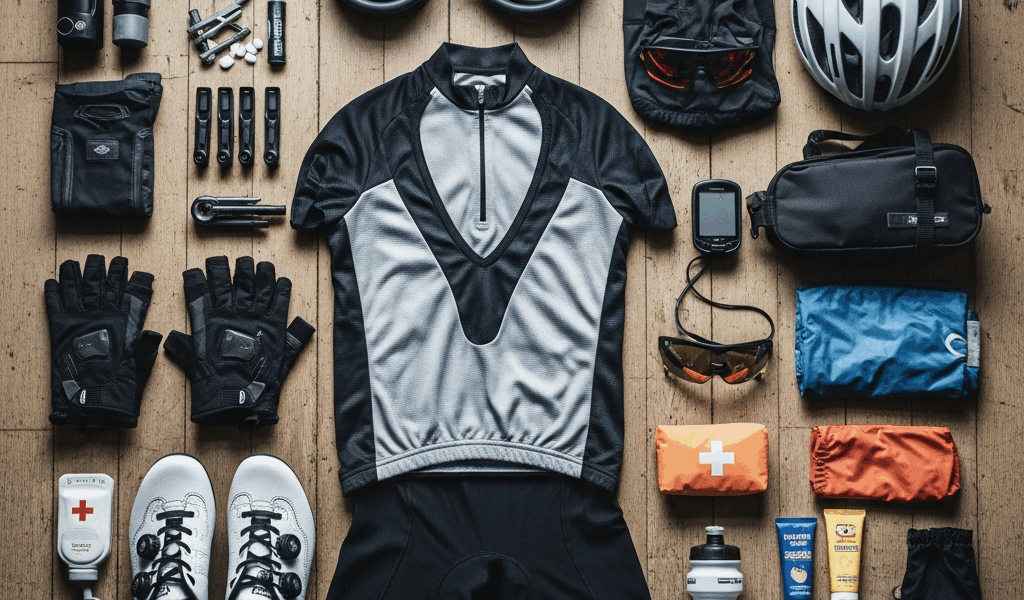
Century Ride Packing List — Everything You Need for 100 Miles
Every century ride packing list I found before my first 100-miler was either buried inside a training plan or scattered across a forum thread from 2014. Nobody had just sat down and written out the definitive list — what to bring, why it matters, and what you’ll regret leaving in the garage. So here’s that list, built from doing this the wrong way a few times before doing it right.
A century ride is a full day on the bike. Six hours minimum, often eight or nine if you stop and eat properly. The packing decisions you make the night before will either save your ride or end it somewhere on a back road with a flat tire and no way to fix it. Let’s go through everything.
Bike and Mechanical Essentials
This is the section that separates people who finish from people who call for a sag wagon. Probably should have opened with this section, honestly — because a nutrition mistake is uncomfortable, but a mechanical failure without the right gear means you’re done.
Spare Tubes
Bring two. Not one. Two. I’ve met riders who bring zero because they have tubeless tires and figure they’re covered by sealant. That’s mostly fine until you get a gash that sealant can’t seal, and then you’re converting tubeless to tubed on the side of the road in the rain. Carry two 700c tubes in the correct valve length for your rims — if you’ve got deep-section wheels, a 48mm or 60mm presta valve, not a standard 32mm. This sounds like a small detail. It is not a small detail when you’re standing there.
CO2 vs. Hand Pump
Burned by a CO2 cartridge that turned out to be empty at mile 67, I now carry both. My preference is a Lezyne Pressure Drive hand pump on the frame as the backup, and two 16g CO2 cartridges with a Genuine Innovations inflator head for the quick fix. CO2 inflates a tire in about 10 seconds. A hand pump takes three minutes of actual work. On a solo ride in cold weather, those three minutes matter. But CO2 runs out, and you only get one shot per cartridge, so the pump stays in the jersey pocket as insurance.
Tire Levers and Multi-Tool
Two plastic tire levers — Pedro’s are fine, around $4 for a set — and a compact multi-tool with a chain breaker. The Topeak Ratchet Rocket Lite DX is what I use. It’s $40, weighs next to nothing, and has gotten me out of three mechanical situations that would have stranded a less-prepared rider. The chain breaker specifically matters for century rides because you’re putting real mileage on your drivetrain in a single day.
Chain Quick Link
One KMC or Shimano quick link that matches your chain speed (11-speed, 12-speed — get the right one). If your chain snaps or you need to break it for any reason, this is how you put it back together without a bike shop. Takes up zero space. Weigh nothing. Forget this at your peril.
Nutrition and Hydration Gear
Most century ride nutrition advice tells you what to eat but forgets to tell you how to carry it. Both matter.
Bottles vs. Hydration Pack
For a supported century with rest stops every 15–20 miles, two 24oz bottles in your frame cages is enough — you’ll refill constantly. For an unsupported ride or a route with long gaps between stops, consider a 1.5L hydration pack. The Camelbak Chase Vest works well and has enough storage to double as your gear bag. I’ve done centuries both ways. The bottles are cleaner, the pack carries more. Your route determines which one to use.
How Much Food for 100 Miles
The number that works for most riders is 200–250 calories per hour on the bike. Over a 7-hour century, that’s 1,400 to 1,750 calories you need to consume while riding. You won’t get all of that from your pockets — rest stops fill the gap — but you should have at least 800 calories on your person at the start. Three to four gels, two rice cakes or Clif bars, and a sleeve of chews gets you close. The specific math matters less than the habit of eating before you feel hungry. By the time hunger hits at mile 70, you’re already behind.
Salt Tabs
Nuun Sport tablets in your bottles, or SaltStick Fastchews in your pocket. On rides over four hours, electrolyte loss — particularly sodium — becomes a real factor. I learned this lesson on a hot August century when I cramped so badly at mile 85 that I had to stop for 20 minutes. I had eaten enough. I had drunk enough water. I had taken zero salt. The fix was a single SaltStick tab and five minutes of walking. Carry them.
Real Food vs. Gels
Gels are efficient and easy to open with one hand. They’re also disgusting after you’ve eaten six of them. Real food — a peanut butter and honey sandwich cut in quarters, dates, a banana — sits better in your stomach over a long effort and keeps your mood from tanking around mile 60. Mix both. Use gels when you’re pushing a climb and need fast calories. Use real food during relaxed stretches when you can actually chew.
Clothing for Changing Conditions
A century ride starts at 7am and might end at 3pm. That’s potentially a 25-degree temperature swing, especially in spring or fall. Pack for what the ride ends as, not what it starts as.
Arm Warmers and Vest
These two items are the most underrated pieces of kit in cycling. Arm warmers stuff into a jersey pocket when you don’t need them and add meaningful warmth when the temperature is in that awkward 55–65°F range. A lightweight wind vest — the Castelli Superleggera 2 is excellent, about $80, packs to the size of an orange — cuts wind chill on descents without overheating you on climbs. Both items together weigh under 200 grams. Leave them at home once. You’ll never leave them at home again.
Rain Jacket
Check the forecast, then bring a rain jacket anyway. The Rapha Core Rain Jacket II is my current go-to, but anything packable and waterproof works. Riding in rain without a jacket is miserable. Riding in rain with a jacket is merely unpleasant. There’s a meaningful difference when you’ve got 40 miles left.
Chamois Cream and Sunscreen
Apply chamois cream before you put the bibs on. Not after. Assos Chamois Creme is the gold standard — a small tub lasts months. For a 6+ hour ride, the saddle contact time means even riders who’ve never had saddle sore issues can develop them on a century if they skip this step. Sunscreen goes on exposed arms, legs, the back of the neck, and the tops of your ears. Riders consistently forget their ears. After spending four hours with the sun at the same angle, you will not forget them twice.
Electronics and Navigation
Getting lost on a century wastes energy you need. Having your devices die wastes the navigation tools you packed.
GPS Computer
A Garmin Edge 530 or 830, a Wahoo ELEMNT Bolt — any dedicated GPS computer is better than your phone for navigation on the bike. Download the route to the device before you leave home. Not the night before, that morning. Confirm it’s loaded. Confirm the battery is charged to 100%. A Garmin 530 lasts about 20 hours, which is more than enough. A phone doing GPS navigation lasts maybe four.
Phone Mount and Portable Charger
Your phone goes in a Quad Lock mount on the stem — not in your jersey pocket — so you can see it and access it without stopping. Even with a GPS computer, your phone is your emergency communication device and your backup map. A slim 10,000mAh Anker power bank in your jersey pocket or hydration vest keeps it alive. Plug it in if your phone drops below 40%. Don’t wait until it’s at 10% and you’re trying to call someone.
Route Downloaded Offline
Before the ride, open Google Maps or Komoot, find your route, and download the map area for offline use. Cell service on rural century routes is not guaranteed. Download the offline map, screenshot the turn-by-turn list, and save both. This takes four minutes at home and potentially saves you an hour of confusion on the road.
The Forgot to Pack Hall of Shame
Here’s where the real century ride wisdom lives. Everything in the previous sections is the stuff you know you need. This is the stuff you don’t think about until you need it badly.
Body Glide
Not chamois cream — Body Glide, the stick that looks like a deodorant. It goes on the back of your neck where your jersey collar rubs for six hours, on your inner arms where your jersey sleeves bind, and on your Achilles where your socks meet your shoes. Friction in these spots turns into raw skin by mile 70. Body Glide costs $8. Carry it.
Cash for Rest Stops
Supported centuries often have unofficial rest stops — a gas station, a diner, a church bake sale — that accept cash only. Bring $20 in small bills, folded into your jersey pocket or a small ziplock bag. This has bought me a Coke and a breakfast burrito at mile 55 on more than one occasion, and those calories hit differently than a gel.
Post-Ride Clothes in the Car
This one is so obvious that people skip it. Finished by your parking spot with nothing to change into, you’ll stand there in soaking chamois shorts waiting for someone to bring a bag from the car. Pack a full change of clothes — including shoes and socks — in a bag in your trunk before you drive to the start. Dry clothes within five minutes of finishing a century are one of the best feelings in endurance sports. Have them ready.
Ibuprofen or Pain Reliever
Two Advil in a small ziplock bag. Not because you should rely on them, but because a knee that starts aching at mile 60 can be managed with 400mg of ibuprofen rather than ground to a halt. This isn’t a regular habit — it’s an emergency tool for the back half of a hard ride.
Emergency Contact Written Down
Your phone can die. Your GPS can die. Write your emergency contact’s name and number on a small piece of medical tape and stick it to the inside of your helmet. Old-school, yes. Useful if something actually goes wrong? Completely.
A century ride is a long day but a manageable one when you’ve thought through the gear. Pack the night before, check the list twice, and don’t leave without the spare tube you forgot the first time. The ride itself is hard enough without adding preventable problems to it.

Stay in the loop
Get the latest cycling events today updates delivered to your inbox.