The Team Time Trial: Synchronized Suffering
Team time trials transform cycling from individual endurance test into coordinated group effort. Success requires not just individual strength but the ability to subordinate personal rhythm to collective efficiency. The fastest teams combine raw power with practiced rotation patterns, aerodynamic positioning, and the selflessness to sacrifice individual glory for team result.
The fundamental mechanic is rotation: each rider takes a pull at the front, then peels off and drifts to the back while teammates move forward. This creates a continuously moving pace line that shares the aerodynamic burden. Riders at the front expend significantly more energy than those drafting; frequent rotation equalizes this cost.
Team Time Trial Strategy
Teams typically finish on their fourth or fifth rider’s time, depending on team size—this rule prevents teams from destroying weaker members to maximize speed for survivors. This scoring mechanism creates strategic decisions: do you shed a struggling rider to maintain pace, or slow slightly to keep them in contact?
Communication determines success. Verbal calls signal rotation speed, identify struggling teammates, and coordinate through technical sections. Teams develop their own vocabulary and hand signals through practice. Racing without established communication systems produces chaos.
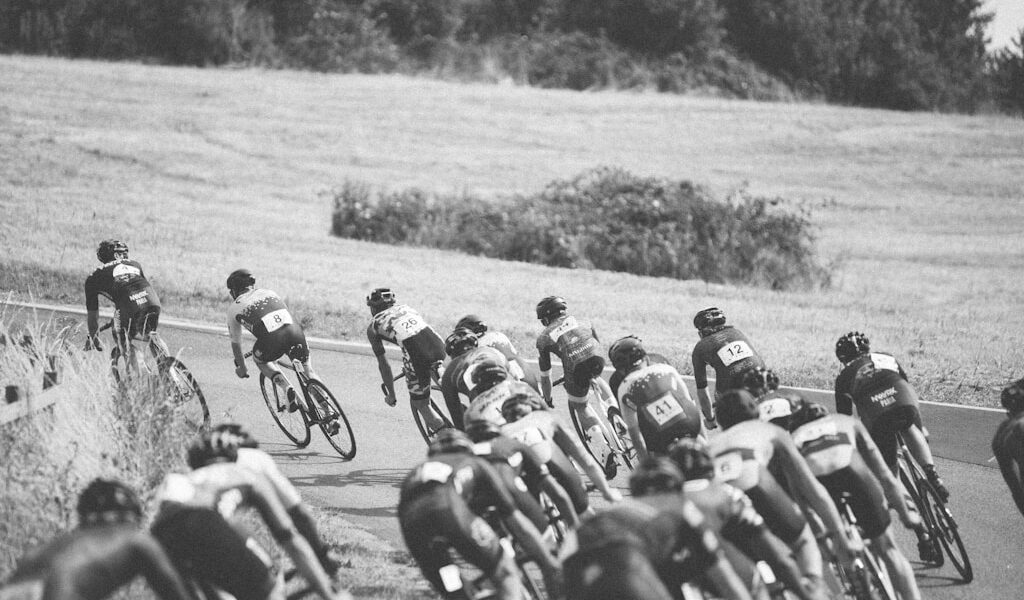
Cornering as a unit presents unique challenges. Teams must maintain proximity through turns without overlapping wheels or losing draft. The lead rider sets corner speed for everyone behind; too fast causes crashes, too slow wastes momentum. Practiced teams corner as single organisms.
Relay Racing: Individual Efforts, Team Results
Relay races aggregate individual performances into team competitions. Each team member completes a specified segment—a lap of a circuit, a section of a linear course, or a time-based stint—with combined times determining team placement. Unlike team time trials, relay riders never work together simultaneously.
Relay strategy involves matching rider strengths to segment demands. If the course includes a climbing segment and a flat segment, assign your climber and your time trialist accordingly. Team composition flexibility matters; a relay team of specialists might outperform a team of stronger but less varied riders.
Transitions in relays require precision. Depending on rules, transitions might involve physical hand-offs, chip-timing-based transfers, or simultaneous starts from different locations. Know your event’s transition rules and practice them—botched transitions waste seconds that riding harder cannot recover.
Mixed Team Events
Olympic-format mixed team time trials pair a men’s team and a women’s team, with the women starting after the men complete their portion. Total combined time determines placement. This format showcases both squads while creating genuine team competition.
Mixed relay events, increasingly popular in gravel and multi-sport contexts, pair riders of different genders, ages, or categories into teams. These formats emphasize participation and community over pure competition, though competitive teams still approach them seriously.
Training for Team Events
Practicing paceline skills in training directly transfers to team event performance. Smooth rotation, steady power output, and communication habits built through regular group riding create the foundation. Specific team event practice adds race-specific elements: planned rotation patterns, weakness management, and transition rehearsal.
Power consistency matters more in team events than individual racing. Surging disrupts teammates; smooth, sustainable effort allows the team to maintain collective efficiency. Train your ability to hold exact power targets rather than responding to feel alone.
The Team Experience
Team events create bonding experiences unavailable in individual competition. Shared suffering, mutual dependence, and collective achievement forge connections that persist beyond race day. For riders who find individual racing isolating, team events provide community and shared purpose that renew competitive motivation.