Chip Timing vs. Manual: How Races Track 10,000 Finishers

The Challenge of Mass Start Timing

When 10,000 riders cross a start line over a 30-minute period and finish in random order hours later, determining individual times requires systems that would have seemed impossible a generation ago. Modern timing technology enables mass participation events that would otherwise drown in administrative chaos, but understanding how these systems work helps participants optimize their results and troubleshoot problems when they arise.

The fundamental challenge is matching each physical human to their corresponding data record—and doing so reliably across thousands of participants with minimal staff intervention. Manual timing worked for small fields but scales terribly; chip timing inverts this relationship, scaling efficiently while introducing technical complexity that participants must navigate.

Chip Timing Technology Explained

Modern timing chips use RFID (Radio-Frequency Identification) technology. Each chip contains a unique identifier that, when passing through an electromagnetic field generated by timing mats, transmits its code along with a precise timestamp. The system knows chip #47821 crossed the mat at 10:47:23.156; cross-referencing that chip number to registration data identifies the participant.

Two chip formats dominate mass-participation events: ankle-worn transponders and bib-integrated tags. Ankle transponders offer reliability through consistent positioning close to the timing mat. Bib tags eliminate the step of attaching a separate device but can suffer detection issues if participants bend, fold, or improperly wear their numbers.

The timing mat itself is an antenna that reads chips within its detection zone, typically extending a few feet above and beside the mat surface. Multiple mats typically cover the start/finish line to ensure redundancy—if one mat misses a chip reading, another catches it. Width coverage matters: wider roads require longer mats or multiple mats positioned side-by-side to capture all lanes.

Timing companies invest heavily in equipment and expertise. Major providers like ChronoTrack, MyLaps, and RFID Race Timing maintain equipment libraries valued in hundreds of thousands of dollars and employ technicians who specialize in event logistics.

Gun Time Versus Chip Time

Gun time measures from when the race officially starts—the moment the starting horn sounds or flag drops. Chip time measures from when the individual crosses the start mat, beginning their personal clock. For participants who start at the front near the timing mat, these times are nearly identical, differing by seconds at most.

For those starting minutes behind in large fields, the difference can be substantial. If you start 5 minutes after the gun in a crowded wave, your gun time exceeds your chip time by roughly 5 minutes. In marathons and mass-participation cycling events, this gap can exceed 10 minutes for participants in rear corrals.

Most mass-participation events publish chip times for individual results while using gun time for overall placements and prize determinations. This distinction matters competitively: you might have the fastest chip time in your age group but lose on gun time because you started further back. Understand which timing method determines awards before the event.

Common Timing Problems and Solutions

Missed reads occur when chips fail to register at timing points. Causes include improper chip placement (too high on the ankle, bib folded over the chip area), multiple chips stacking at the mat simultaneously creating signal interference, or technical failures in the mat or chip hardware.

Staying centered in the timing zone and not bunching with other riders at the precise moment of mat crossing reduces miss risk. Cross timing mats deliberately rather than drifting across at an angle. Avoid covering chips with gear—shoe covers containing metallic threads can interfere with RFID signals.

Incorrect registration data creates timing orphans—chips that register times but can’t be matched to participants. Always verify your registration information during packet pickup, including any timing chip numbers pre-assigned. If your chip number doesn’t match your registration record, results become problematic or impossible to correct after the fact.

Manual Timing: When Chips Aren’t Enough

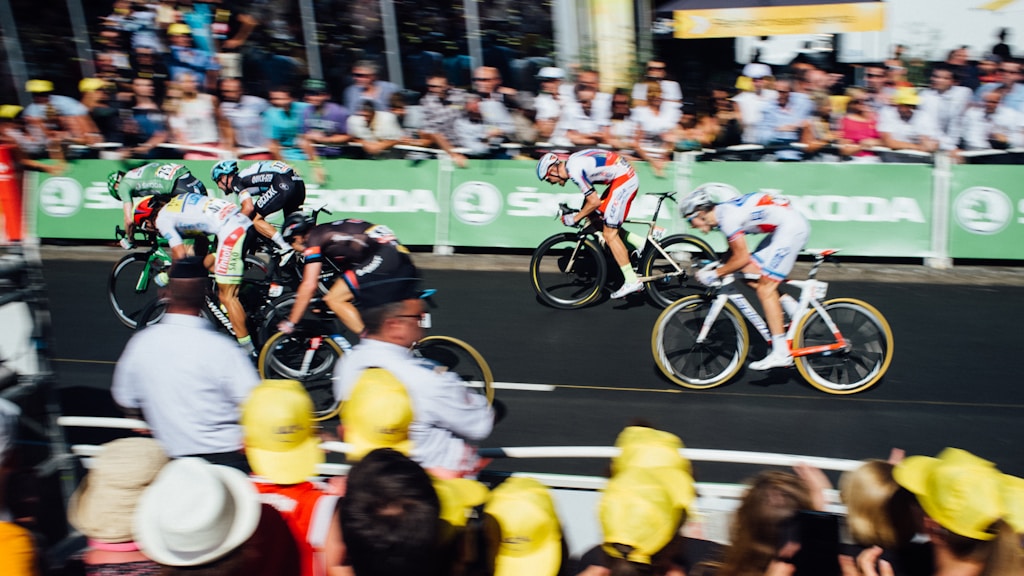
Smaller races, particularly competitive events with small fields where individual results matter greatly, often use manual timing supplemented by video backup. Trained officials record finishers by bib number in order; video provides verification when disputes arise. This system works well for fields under 200 but becomes error-prone at larger scales where human attention cannot keep pace with finishing density.

Some events use hybrid approaches: chip timing for mass fields, manual timing for elite waves where accuracy to hundredths of seconds matters more than throughput. Time trial events, where riders start individually at set intervals, often use manual timing triggered by photocells that precisely detect wheel crossing through the finish plane.

Photo finishes provide the ultimate backup, using high-speed cameras that capture thousands of frames per second. These systems can separate finishers whose naked-eye order is impossible to determine, ensuring fair results in close competitions.

Ensuring Your Time Counts

Attach your timing chip according to instructions—usually on the left ankle, outside the sock, with the branded side facing forward or outward. Don’t cover chips with shoe covers that contain metallic threads. Cross timing mats cleanly rather than swerving across them at angles that minimize mat contact time.

Verify your result in preliminary postings and report discrepancies immediately; protests lodged days later face uphill battles against finalized records. Most events have a results tent or designated officials handling timing issues—find them before leaving the venue if anything seems wrong.

Your finish only counts if the system captures it—take the steps that ensure it does. A great performance with no official time is a story you tell, not a result you carry forward.

Jason Michael

Jason Michael

Author & Expert

Jason Michael is a Pacific Northwest gardening enthusiast and longtime homeowner in the Seattle area. He enjoys growing vegetables, cultivating native plants, and experimenting with sustainable gardening practices suited to the region's unique climate.

29 Articles
View All Posts