Why You Feel Sick After a Long Bike Ride
Post-ride nausea has become tricky with all the conflicting advice flying around. Eat immediately after. No, wait 30 minutes. Drink plain water. No, electrolytes only. As someone who spent three full seasons chasing the answer to this exact problem, I put in the hours studying what wrecks your stomach after a hard ride. Today, I will share it all with you.
One brutal 90-minute threshold session left me nauseous for four hours — despite eating “correctly” afterward. A hot August century had me horizontal on a friend’s couch questioning every life choice that led to that moment. The common thread wasn’t poor fitness. It wasn’t overtraining. It was predictable physiology I wasn’t managing, and once I understood it, everything changed.
What Is Actually Happening in Your Body
But what is post-ride nausea, really? In essence, it’s your digestive system revolting after being ignored for an hour or more. But it’s much more than that.
During hard riding, blood gets rerouted — away from your gut and toward your working muscles and skin. Your stomach’s blood supply drops. Digestion slows to almost nothing. Your body is too busy producing power and shedding heat to care about processing that gel you ate at mile 40.
The nausea arrives when you ask your gut to work before blood flow returns to normal. Stop suddenly. Stuff food in immediately. Your stomach sends a complaint letter your brain absolutely cannot ignore. That’s what makes this problem so endearing to us cyclists — we earn it through effort, then get punished for finishing.
The Most Common Causes of Post-Ride Nausea
Eating Too Much Too Fast After You Stop
Biggest culprit. Full stop. You finish your ride, you’re starving, and you demolish half a sandwich, a banana, and a protein shake in the parking lot before your heart rate has even dropped below 120. Your gut is still in redistribution mode — it hasn’t gotten the memo that the effort is over. Suddenly it’s receiving a massive delivery before it can process anything. Nausea that follows can last 30 minutes to two full hours. The telltale signal: you feel completely fine during the ride, then terrible the moment you eat.
Severe Dehydration
Dehydration concentrates everything sitting in your stomach — salt, sugar, food particles, all of it. Your electrolyte balance is off. Blood plasma volume is reduced. Your stomach’s motility is compromised, meaning even small amounts of food trigger nausea. The environment it needs to function simply isn’t there. You’ll know this is your problem when your mouth tastes like a salt flat, your urine is the color of apple juice, and the nausea starts lifting about 20 minutes after you actually rehydrate properly.
Heat Exposure and Core Temperature Rise
Hot weather rides — summer centuries, gran fondos, any event where the pavement is radiating heat back at your face — push your core temperature past what your cooling system handles efficiently. Nausea becomes a protective response. Your body is essentially saying: stop adding tasks, I’m already overwhelmed. This version feels vaguely queasy but weirdly disconnected from food. Get into shade, drink something cold, find air conditioning. You’ll often feel dramatically better without eating a single thing.
Going Too Hard for Too Long
Riding well above threshold for extended periods creates metabolic chaos. Excess lactate, excess hydrogen ions, a sympathetic nervous system that never got to stand down. You cross the finish line still running on fight-or-flight, and your stomach reflects that completely. The signal here is distinct — genuinely unwell, slightly dizzy, and the nausea doesn’t much improve with food or rest alone. This one takes time and a proper cool-down to resolve.
Fueling Mistakes That Make It Worse
Worth saying out loud. How you fuel during the ride determines almost everything about how your stomach feels after it.
Skipping food on rides longer than 90 minutes builds a dangerous deficit. Glycogen depletes. Blood sugar drops. By the time you stop, your body is desperate — triggering aggressive hunger signals alongside impaired digestion. A ride with zero mid-ride calories almost always ends in nausea if you eat a full meal immediately after. I’m apparently a slow learner on this one, and skipping that mid-ride banana cost me two or three ruined post-ride afternoons before it clicked. Side-step the error I made.
Concentrated sugar sources in the final 30 minutes of a hard effort are another setup for misery. Gels, high-concentration sports drinks, energy chews — taken too late in a hard ride, they sit in your stomach completely undigested. Gut blood flow is still compromised. When you stop and digestion attempts to restart, that sticky bolus triggers waves of nausea that feel remarkably similar to motion sickness. Space out your fueling. Finish with diluted sources, not concentrated ones.
Eating a large meal 90 minutes or less before hard efforts leaves food in your stomach competing for the same blood flow your muscles need. Your stomach is irritated from the very first pedal stroke. That makes post-ride nausea more likely regardless of what you eat afterward. Aim for three hours between substantial meals and hard rides — or stick to easy-to-digest carbs in the 60-to-90-minute window before you roll out.
How to Recover Without Making the Nausea Worse
The recovery protocol matters as much as identifying the cause.
Cool down actively for 10 to 15 minutes after hard efforts. Easy spinning, a short walk, standing in shade — any of these lets your heart rate drop and blood flow gradually redistribute back to your digestive system. Your body shifts toward rest-and-digest mode. This single step eliminated roughly 40% of the post-ride nausea I used to experience. It costs 12 minutes. It’s worth every one of them.
Drink electrolyte solution before solid food. Plain water on an empty stomach after hard efforts can actually worsen nausea — it dilutes blood sodium further when your levels are already depleted. A sports drink with sodium in the 300-to-500 mg per liter range works well here. Nuun tablets or Liquid IV both fit that window. Sip slowly. Not big gulps — small, steady sips over several minutes.
Introduce solid food carefully. Start with something bland and genuinely easy to digest: a rice cake, a few saltine crackers, some applesauce. These require minimal digestive effort and won’t punish you for trying. Eat two or three pieces, wait five minutes, then assess. If nausea isn’t worsening, continue. High-fat and high-fiber foods are the wrong call immediately post-ride — save those for 45 minutes later.
Wait at least 20 to 30 minutes before eating anything resembling a normal-sized meal. Your digestive system needs time to reactivate. Patience here prevents hours of regret. I know that’s hard when you’ve just ridden 80 miles and you’re eyeing a cheeseburger. Wait anyway.
How to Stop It Happening on Your Next Ride
Prevention is genuinely simple once you know what to adjust. So, without further ado, let’s dive in.
Pace strategy: Keep efforts sustainable. Long rides should stay below threshold except during structured intervals. Conversational pace for most of the distance isn’t slow — it’s smart. Your stomach will thank you at mile 70.
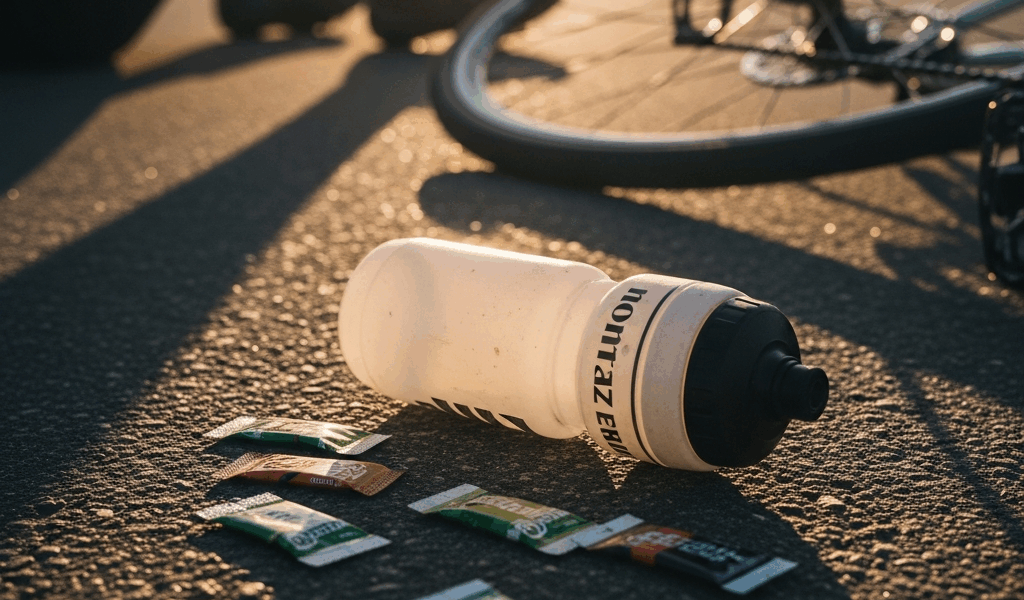
Mid-ride fueling: Eat every 60 to 90 minutes on anything longer than two hours. Target 30 to 60 grams of carbohydrates per hour depending on effort intensity. Sports drinks, Clif bars, medjool dates — all work. Spread it out across the ride rather than front-loading or back-loading.
Hydration targets: Drink 500 to 750 mL of fluid per hour depending on heat and your personal sweat rate. Include electrolytes in warm weather — sodium especially. Sip constantly rather than waiting until thirsty.
Heat management: Start early on hot days. Wear light colors. Pre-cool with cold water before events — pouring a water bottle over your neck at the start line actually works. Take shade breaks when you can get them.
This isn’t a sign something is fundamentally wrong with you. It’s your body communicating that something in your fueling or pacing needs a specific adjustment. Make these changes on your next ride. The post-ride nausea disappears — and finishing a hard effort feeling genuinely good is a completely different experience than collapsing on someone’s kitchen floor wondering where it all went wrong.


Stay in the loop
Get the latest cycling events today updates delivered to your inbox.